
Tebenna gnaphaliella
(Kearfott, 1902)
Everlasting Tebenna Moth
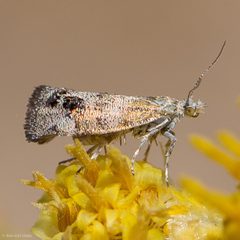
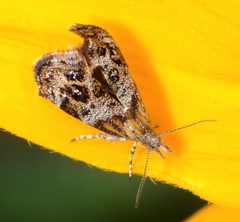
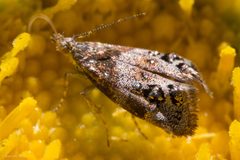
Tebenna gnaphaliella is a small choreutid found across much of the United States. have a wingspan of approximately 10 mm and are active primarily in June and July, with evidence suggesting at least two per year. The is extremely similar or identical in appearance to the Palearctic Tebenna micalis. Larvae are leaf miners that feed on plants in the tribe Gnaphalieae, including species formerly classified in Gnaphalium.
Pronunciation
How to pronounce Tebenna gnaphaliella: //tɛˈbɛnə ɡnəˌfælɪˈɛlə//
These audio files are automatically generated. While they are not always 100% accurate, they are a good starting point.
Identification
Distinguished from other North American Tebenna by plant association and geographic range. Separation from the Palearctic Tebenna micalis requires dissection or molecular analysis; the two species are externally indistinguishable.
Images
Appearance
Very small with wingspan of approximately 10 mm. Overall appearance is extremely similar or identical to the Palearctic Tebenna micalis.
Habitat
Associated with herbaceous plants, particularly flowers where are commonly found. Larval consists of leaves of plants in the tribe Gnaphalieae.
Distribution
United States, ranging from Florida to California and northward to at least New Hampshire.
Seasonality
active June and July; at least two per year inferred from .
Diet
Larvae feed on various plants in tribe Gnaphalieae (formerly Gnaphalium), specifically: Pseudognaphalium obtusifolium, Pseudognaphalium helleri, and Helichrysum . Feeding occurs as leaf miners within plant leaves.
Host Associations
- Pseudognaphalium obtusifolium - larval
- Pseudognaphalium helleri - larval
- Helichrysum - larval ; not specified
Life Cycle
Larval stage is a . Multiple per year suggested, though complete developmental details are not documented.
Behavior
frequently found on flowers of herbaceous plants. Larvae mine within leaves of plants.
Similar Taxa
- Tebenna micalisExternally identical or extremely similar in appearance; distinguished by Palearctic distribution and requires dissection or molecular analysis for definitive separation.
More Details
Taxonomic note
The is extremely similar or identical to Tebenna micalis, a Palearctic species. The relationship between these may warrant further investigation.