
Bondia shastana
Davis, 1969
Bondia shastana is a small in the Carposinidae, described by Donald R. Davis in 1969. The name references Mount Shasta, California, the type locality. are active during multiple periods throughout the year, with records spanning spring, summer, and early autumn.
Pronunciation
How to pronounce Bondia shastana: /ˈbɒndiə ʃæˈstænə/
These audio files are automatically generated. While they are not always 100% accurate, they are a good starting point.
Identification
Distinguished from primarily by geographic distribution and association with the Mount Shasta region. The small forewing size (6–10 mm) and specific periods (March, June–July, September) may aid identification where other Bondia occur sympatrically. Detailed diagnostic morphological features are not published in accessible sources.
Images
Appearance
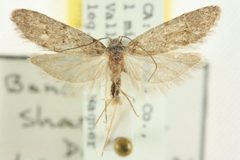
Small with forewings measuring 6–10 mm in length. Specific coloration and pattern details are not documented in available sources.
Habitat
Specific preferences are undocumented. The type locality at Mount Shasta suggests association with montane or volcanic landscapes in the Cascade Range. Records from Oregon, California, and Arizona indicate occurrence in western North American environments.
Distribution
Recorded from Oregon, California, and Arizona in western North America. The type locality is Mount Shasta, California.
Seasonality
active in March, from June to July, and in September. This multivoltine or partially pattern suggests potential for multiple annually or extended periods.
Life Cycle
Larval and details are unknown. The Carposinidae includes with larvae that feed internally in fruits, seeds, or stems of plants, but specific relationships for B. shastana have not been documented.
Behavior
activity inferred from -level traits; specific unrecorded.
Human Relevance
No documented economic or agricultural significance. Not known to be a pest .
Similar Taxa
- Other Bondia species overlap in distribution and general ; precise identification requires examination of genitalia or other subtle characters not detailed in public sources.
More Details
Etymology
The specific epithet shastana refers to Mount Shasta, the volcanic peak in northern California that serves as the type locality for the .