
Protambulyx strigilis
Linnaeus, 1771
streaked sphinx
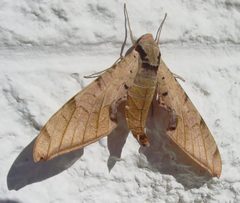
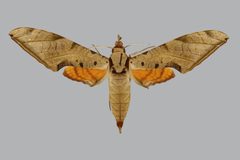
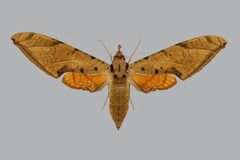
A large sphinx moth ( Sphingidae) distributed across tropical and subtropical lowlands from Florida through Central and South America. First described by Linnaeus in 1771, it is commonly known as the streaked sphinx. The exhibits year-round activity in equatorial regions and seasonal periods at higher latitudes. Larvae feed on diverse plants including species of Spondias, Anacardium, and Schinus.
Pronunciation
How to pronounce Protambulyx strigilis: //prəʊˈtæmbjʊlɪks ˈstrɪdʒɪlɪs//
These audio files are automatically generated. While they are not always 100% accurate, they are a good starting point.
Identification
Wingspan ranges 108–134 mm. The 'strigilis' refers to streaked markings; can be distinguished from other Protambulyx by wing pattern and geographic overlap. The Protambulyx is characterized by forewing shape and pattern elements shared among its species.
Images
Habitat
Tropical and subtropical lowlands. Specific microhabitat preferences are not documented.
Distribution
Florida (USA), throughout Central America and the West Indies, and South America including Colombia, Ecuador, Paraguay, Peru, Bolivia, Venezuela, Guyana, Suriname, French Guiana, Brazil, and Argentina. Present across all regions of Brazil with records from Acre to Rio Grande do Sul.
Seasonality
Florida: March and June–July. Rica: year-round. Bolivia: April–August and October–December. Brazil: April. Peru: June.
Diet
Larvae feed on Spondias dulcis, S. mombin, S. purpurea, S. cytherea, Astronium graveolens, Anacardium occidentale, Comocladia dodonea, C. dentata, Metopium toxiferum, Simarouba glauca, S. amara, Erythroxylum havanense, Eupatorium villosum, Lycopersicon , Sambucus australis, and Schinus terebinthifolius. feeding habits are not documented.
Host Associations
- Spondias dulcis - larval foodplant
- Spondias mombin - larval foodplant
- Spondias purpurea - larval foodplant
- Spondias cytherea - larval foodplant
- Astronium graveolens - larval foodplant
- Anacardium occidentale - larval foodplant
- Comocladia dodonea - larval foodplant
- Comocladia dentata - larval foodplant
- Metopium toxiferum - larval foodplant
- Simarouba glauca - larval foodplant
- Simarouba amara - larval foodplant
- Erythroxylum havanense - larval foodplant
- Eupatorium villosum - larval foodplant
- Lycopersicon - larval foodplant unspecified
- Sambucus australis - larval foodplant
- Schinus terebinthifolius - larval foodplant
Life Cycle
Complete with , larva, pupa, and stages. Specific details on sites or strategy are not documented.
Similar Taxa
- Other Protambulyx speciesShared characteristics require careful examination of wing pattern and markings for definitive identification; geographic distribution can assist in narrowing possibilities.
More Details
Taxonomic history
Originally described as Sphinx strigilis by Linnaeus in 1771; later transferred to Protambulyx.
Observation frequency
Over 5,000 observations recorded on iNaturalist, indicating it is relatively well-documented within its range.