
Eumorpha vitis
Linnaeus, 1758
Vine Sphinx
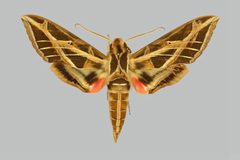
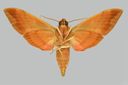
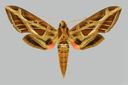
Eumorpha vitis, commonly known as the vine sphinx, is a hawk moth in the Sphingidae with a wingspan of 85–105 mm. are active year-round in tropical regions and during specific seasonal windows in temperate areas, feeding on nectar from flowers including Vinca rosea. The is notable for its broad geographic distribution spanning from Argentina through Central America and the Caribbean to the southern United States, with occasional strays reaching as far north as Nebraska.
Pronunciation
How to pronounce Eumorpha vitis: /juːˈmɔːr.fə ˈvaɪ.tɪs/
These audio files are automatically generated. While they are not always 100% accurate, they are a good starting point.
Identification
Distinguished from other Eumorpha by combination of geographic range, wing pattern, and larval plant associations. Specific wing pattern details not provided in source material. May be confused with other sphingid in the same ; precise identification requires examination of wing venation and pattern details not fully documented here.
Images
Appearance
Habitat
Found in diverse environments from tropical lowlands to subtropical and warm temperate regions. Associated with areas supporting larval plants including grape vines (Vitis ) and related climbing plants. Occurs in natural and cultivated settings where host plants are present.
Distribution
Native range extends from Argentina north through Central America, the West Indies, and Mexico to the southern United States (Arizona, Texas, Mississippi, Florida). Occasional strays documented north to Nebraska. Three recognized with distinct geographic distributions: E. v. vitis (mainland range), E. v. fuscatus (St. Lucia, Guadeloupe, Martinique), and E. v. hesperidum (Jamaica).
Seasonality
Activity patterns vary by latitude: year-round in tropics; April–May and July–October in Florida; July–September in single in northern part of range.
Diet
feed on nectar of various flowers; specifically documented feeding on Vinca rosea. Larvae feed on Vitis (including Vitis vinifera), Cissus species (C. incisa, C. pseudosicyoides, C. rhombifolia, C. sicycoides, C. verticillata), Ludwigia decurrens, Ludwigia erecta, Magnolia virginiana, and Parthenocissus species.
Host Associations
- Vitis vinifera - larval food plantcommon grape
- Cissus incisa - larval food plant
- Cissus pseudosicyoides - larval food plant
- Cissus rhombifolia - larval food plant
- Cissus sicycoides - larval food plant
- Cissus verticillata - larval food plant
- Ludwigia decurrens - larval food plant
- Ludwigia erecta - larval food plant
- Magnolia virginiana - larval food plantsweetbay magnolia
- Parthenocissus - larval food plant level, unspecified
- Vinca rosea - nectar source
Life Cycle
Complete with , larva, pupa, and stages. Larval stage feeds on specified plants. One per year in northern range; multiple generations or continuous breeding in tropical regions. Specific details of site and stage not documented.
Behavior
are or , engaging in sustained hovering while feeding on nectar. Larval feeding not specifically described beyond plant associations.
Ecological Role
function as while feeding on nectar. Larvae serve as herbivores on specified plants, potentially contributing to nutrient cycling and serving as food source for . Specific predator and relationships not documented.
Human Relevance
Larvae feed on cultivated grape (Vitis vinifera), indicating potential minor agricultural significance in viticulture regions. Otherwise not documented as significant pest or beneficial .
Similar Taxa
- Other Eumorpha speciesSimilar wing patterns and body ; require detailed examination of wing venation and pattern for separation
More Details
Subspecies
Three recognized: Eumorpha vitis vitis (widespread mainland distribution), Eumorpha vitis fuscatus (Rothschild & Jordan, 1906) restricted to St. Lucia, Guadeloupe, and Martinique, and Eumorpha vitis hesperidum (Kirby, 1880) to Jamaica.
Sources and further reading
- BugGuide
- Wikipedia
- GBIF taxonomy match
- iNaturalist taxon
- NCBI Taxonomy
- Catalogue of Life
- Curvature values, a new aspect in the morphology of grapevine seeds | Blog
- Waiter, there’s a fly on my fungus… | Beetles In The Bush
- Bug Eric: True Bug Tuesday: Mirid plant bug
- Exploring arctic plants and lichens
- Bug Eric: Spider Sunday: Sassacus
- Bug Eric: A Case of Predator Mimicry in the Bee Fly Genus Epacmus? (Diptera: Bombyliidae)