
Enyo ocypete
Linnaeus, 1758
Swift-winged Sphinx
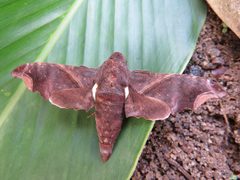
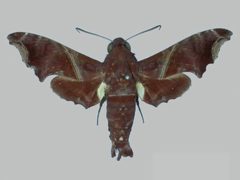
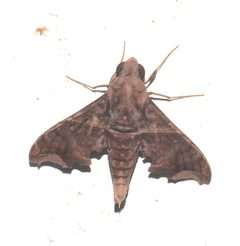
Enyo ocypete is a in the Sphingidae, first described by Carl Linnaeus in 1758. It ranges from the southern United States through Central America to northern Argentina. have a wingspan of approximately 60 mm. The exhibits year-round activity in tropical regions and southern Florida, with more restricted periods farther north.
Pronunciation
How to pronounce Enyo ocypete: /ˈɛ.njoʊ oʊˈsɪ.pə.ti/
These audio files are automatically generated. While they are not always 100% accurate, they are a good starting point.
Identification
The combination of moderate size (60 mm wingspan), geographic range from southern U.S. to northern Argentina, and year-round activity in tropical regions helps distinguish this from other Enyo species. Males are identifiable by their smaller wing size relative to females.
Images
Appearance
have a wingspan of approximately 60 mm. Males exhibit smaller wing size than females. The possesses the typical streamlined, robust body form characteristic of sphinx moths, with narrow, pointed forewings adapted for rapid .
Habitat
Occurs in tropical and subtropical regions including southern Florida and Louisiana. The is associated with supporting its larval plants in the Vitaceae, Dilleniaceae, and possibly Onagraceae.
Distribution
Found from the southern United States (southern Florida, Louisiana) through Central America to Venezuela, Brazil, Peru, Bolivia, Paraguay, and northern Argentina. GBIF records indicate presence across much of Brazil and the Caribbean.
Seasonality
are active year-round in tropical regions, southern Florida, and Louisiana. In the northern part of the range, adults fly from August to November.
Diet
Larvae probably feed on Caribbean grape (Vitis tiliifolia) and other Vitaceae and Dilleniaceae including Vitis, Cissus rhombifolia, Ampelopsis, Tetracera volubilis, Curatella americana, Tetracera hydrophila, and Doliocarpus multiflorus. Ludwigia (Onagraceae) may also serve as a plant.
Host Associations
- Vitis tiliifolia - larval Caribbean grape
- Vitis - larval
- Cissus rhombifolia - larval Vitaceae
- Ampelopsis - larval Vitaceae
- Tetracera volubilis - larval Dilleniaceae
- Curatella americana - larval Dilleniaceae
- Tetracera hydrophila - larval Dilleniaceae
- Doliocarpus multiflorus - larval Dilleniaceae
- Ludwigia - possible larval Onagraceae; tentative association
Behavior
Males fly faster than females, an advantage for mating. Females exhibit slower , which is used for selecting plants and gathering resources.
Ecological Role
Larval herbivore on climbing and woody plants in several . likely serve as and are prey for .
Similar Taxa
- Other Enyo speciesSimilar body form and size; distinguished by geographic range, period, and plant associations where known