
Hylesia
Hübner, 1820
Species Guides
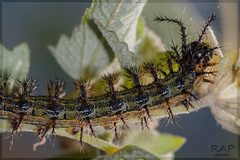
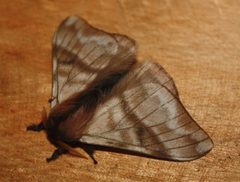
1Hylesia is a of in the Saturniidae, Hemileucinae, erected by Jacob Hübner in 1820. in this genus are distributed across South and Central America, with well-documented in Brazil, Venezuela, French Guiana, Colombia, Argentina, and Paraguay. The genus is notable for causing lepidopterism—a medical condition involving skin and respiratory reactions from contact with urticating setae (bristles) on females. Several species, particularly H. metabus and H. nigricans, are significant public health concerns due to seasonal of dermatitis.
Pronunciation
How to pronounce Hylesia: /haɪˈliːsɪə/
These audio files are automatically generated. While they are not always 100% accurate, they are a good starting point.
Identification
females possess urticating setae on the that can penetrate human skin, distinguishing them from many other saturniid . Specific visual identification characters for the genus as a whole are not documented in available sources; -level identification requires examination of genitalia and wing pattern details.
Images
Habitat
Hylesia inhabit tropical and subtropical environments including seasonally dry tropical forests, coastal regions, and agricultural areas. In French Guiana, -prone sites are associated with low tree densities and pronounced seasonal variation between dry and rainy periods, contrasting with stable inland rainforest where outbreaks are rare.
Distribution
South and Central America: documented in Brazil (Minas Gerais, Rio de Janeiro, São Paulo, Paraná, Santa Catarina, Rio Grande do Sul), Venezuela (Anzoátegui, Sucre, Monagas), French Guiana, Colombia, Argentina, and Paraguay.
Seasonality
is synchronized with rainy seasons. Hylesia metabus shows peak activity July through September during the May–November rainy season in Venezuela. Seasonal correlate with climate patterns, particularly pronounced dry-rainy season transitions.
Life Cycle
Holometabolous development with , larval, pupal, and stages. Hylesia metapyrrha completes development in approximately 191 days under laboratory conditions: egg incubation 52 days, seven larval instars over 74.59 days, pre-pupa 8.82 days, pupa 50.56 days, and adult stage 5.50 days. Female pupae are significantly larger and longer-developing than males. Hylesia metabus exhibits multivoltine cycles with overlapping and in soil.
Behavior
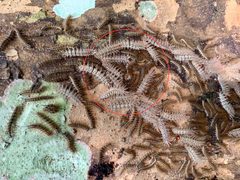
Larvae of H. metapyrrha display gregarious habits, dispersing at pre-pupa formation. females of multiple exhibit strong positive , aggregating around artificial light sources. Females release clouds of urticating abdominal setae that become airborne and cause dermatological and respiratory in humans. Mass events lead to high- .
Human Relevance
Major public health concern due to lepidopterism—urticating setae from females cause pruritic dermatitis, papular , and respiratory . documented in Argentina, Brazil, Venezuela, Colombia, and French Guiana. Affected include oil , coastal residents, and agricultural . Treatment involves antihistamines and topical steroids; prevention focuses on avoiding light-attracted and using protective barriers.
Similar Taxa
- Other Hemileucinae generaHemileucinae includes other urticating , but Hylesia is distinguished by female setae causing lepidopterism rather than larval urtication alone.
More Details
Medical significance
Hylesia metabus and H. nigricans are the most extensively documented for public health impact. The setae contain histamine-releasing fluids that trigger inflammatory responses. are unpredictable and localized despite broad geographic distribution.
Genome characteristics
Hylesia metabus exhibits elevated size driven by accumulation, distinguishing it among Lepidoptera.
Sources and further reading
- BugGuide
- Wikipedia
- GBIF taxonomy match
- iNaturalist taxon
- NCBI Taxonomy
- Catalogue of Life
- What’s Eating You? Black Butterfly (Hylesia nigricans)
- Biological aspects of Hylesia metapyrrha (Lepidoptera; Saturniidae; Hemileucinae), in laboratory
- Dermatitis Caused by Moths of Hylesia Genus (Lepidoptera, Saturniidae) in Northeastern States of Venezuela: I. Bioecology of Hylesia metabus Cramer. Clinical Features of Lepidopterism Determined by This Species
- Dermatitis Caused by Moths of Hylesia Genus (Lepidoptera, Saturniidae) in Northeastern States of Venezuela: I. Bioecology of Hylesia metabus Cramer. Clinical Features of Lepidopterism Determined by This Species
- Dermatitis Caused by Moths of Hylesia Genus (Lepidoptera, Saturniidae) in Northeastern States of Venezuela: I. Bioecology of Hylesia metabus Cramer. Clinical Features of Lepidopterism Determined by This Species
- Parasitoides larva-pupa de Hylesia metabus Cramer (Lepidoptera: Saturniidae) en la región nororiental de Venezuela: un caso de control Biológico Natural
- Influence of habitat and climate on the spatial distribution of outbreaks of the Hylesia metabus moth, responsible for Lepidopterism, in coastal French Guiana
- Transposable element accumulation drives genome size increase in Hylesia metabus (Lepidoptera: Saturniidae), an urticating moth species from South America.