
Xyela middlekauffi
Xyela middlekauffi is a of in the Xyelidae, one of the most primitive lineages within Hymenoptera. Species in this are associated with conifer , particularly pines. Xyela middlekauffi has been documented from a limited number of observations, suggesting either restricted distribution or low detectability. Like other xyelids, likely have short life spans and are active during early spring.
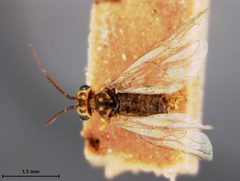
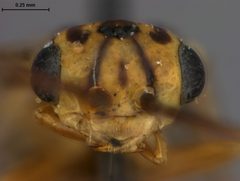
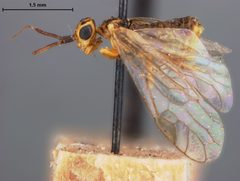
Pronunciation
How to pronounce Xyela middlekauffi: /zaɪˈɛlə ˌmɪdəlˈkɔːfi/
These audio files are automatically generated. While they are not always 100% accurate, they are a good starting point.
Identification
Xyela are distinguished from other by their elongate, cylindrical body form and the distinctive of males, which have the third flagellomere greatly elongated. Xyela middlekauffi specifically may be separable from by subtle differences in genitalic structure and association, though detailed diagnostic features for this species remain poorly documented in accessible literature.
Images
Habitat
Associated with pine-dominated ; larvae develop within male strobili of Pinus .
Distribution
Documented from the western United States, specifically California; precise range boundaries unknown due to limited collection records.
Seasonality
active in early spring, coinciding with pollen release from male pine cones; exact period varies with elevation and latitude.
Diet
Larvae feed on pollen within developing male strobili of Pinus ; do not feed.
Host Associations
- Pinus - larval develops within male strobili
Life Cycle
Females oviposit into male strobili of pines. Larvae feed on pollen, then drop to the ground to pupate in soil. emerge the following spring. This pattern is inferred from well-documented of .
Behavior
Males have been observed swarming around pine branches, likely in association with mate location. are short-lived and do not feed.
Ecological Role
Pollen consumer within pine reproductive structures; may incidentally contribute to pollen distribution. Serves as prey for .
Human Relevance
No known economic importance; of interest to hymenopteran systematists due to phylogenetic position as basal .
Similar Taxa
- Xyela juliiWidespread with similar and ; distinguished by geographic range and subtle genitalic differences.
- PleroneuraOther xyelid with larvae in conifer strobili; Pleroneura are associated with spruce rather than pine and have different antennal structure.