
Xiphydria maculata
Say, 1836
Spotted Wood Wasp
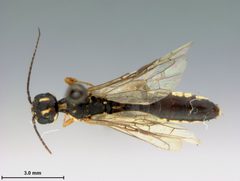
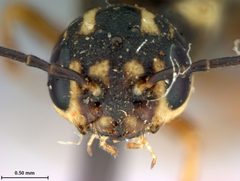
Xiphydria maculata is a wood wasp in the Xiphydriidae. are known to visit flowers for nectar. The larvae develop as borers in dead or dying hardwood trees, particularly maple and other deciduous . This species is part of a group of primitive that lack the narrow waist characteristic of most other Hymenoptera.
Pronunciation
How to pronounce Xiphydria maculata: /ksɪˈfɪdriə ˌmækjʊˈleɪtə/
These audio files are automatically generated. While they are not always 100% accurate, they are a good starting point.
Images
Habitat
Associated with deciduous forests, particularly where maple trees occur. are attracted to blacklights.
Distribution
Eastern North America, with records from Ontario and Quebec south to Georgia and west to Texas, Missouri, and Kansas.
Seasonality
have been recorded from March through October, with peak activity in spring and early summer.
Host Associations
- maple - larval larvae bore in dead or dying wood
Ecological Role
Larvae contribute to wood decomposition by tunneling in dead and dying hardwoods. may serve as when visiting flowers.
Similar Taxa
- Xiphydria tibialissimilar size and appearance, but X. maculata has spotted patterning as suggested by its specific epithet
- other Siricoideashare cylindrical body form and wood-boring larvae, but Xiphydriidae lack the horn-like ovipositor of Siricidae (horntails)
More Details
Taxonomic Note
Xiphydriidae are sometimes called 'false wood wasps' or included informally with wood wasps. They represent one of the most basal lineages of Hymenoptera.
Parasitoid Relationships
Larvae of Xiphydria are known for ichneumonid wasps in the Rhyssella, which use their long ovipositors to reach larvae deep in wood.
Sources and further reading
- BugGuide
- iNaturalist taxon
- NCBI Taxonomy
- Be careful around baldfaced hornets, Dolichovespula maculata — Bug of the Week
- An inside look at baldfaced hornets, Dolichovespula maculata — Bug of the Week
- High fiber diets for baldfaced hornets? Nah, construction materials for enlarging nests: Baldfaced hornets, Dolichovespula maculata — Bug of the Week
- What do insects do in winter, Part 2? Tolerating the big chill: Banded woolly bears, Pyrrharctia isabella, field crickets, Gryllus spp., baldfaced hornets, Dolichovespula maculata, and others — Bug of the Week
- Bug Eric: Window-winged Moths
- Bug Eric: First Night of Blacklighting