Mischocyttarus navajo
Bequard, 1933
Navajo Paper Wasp
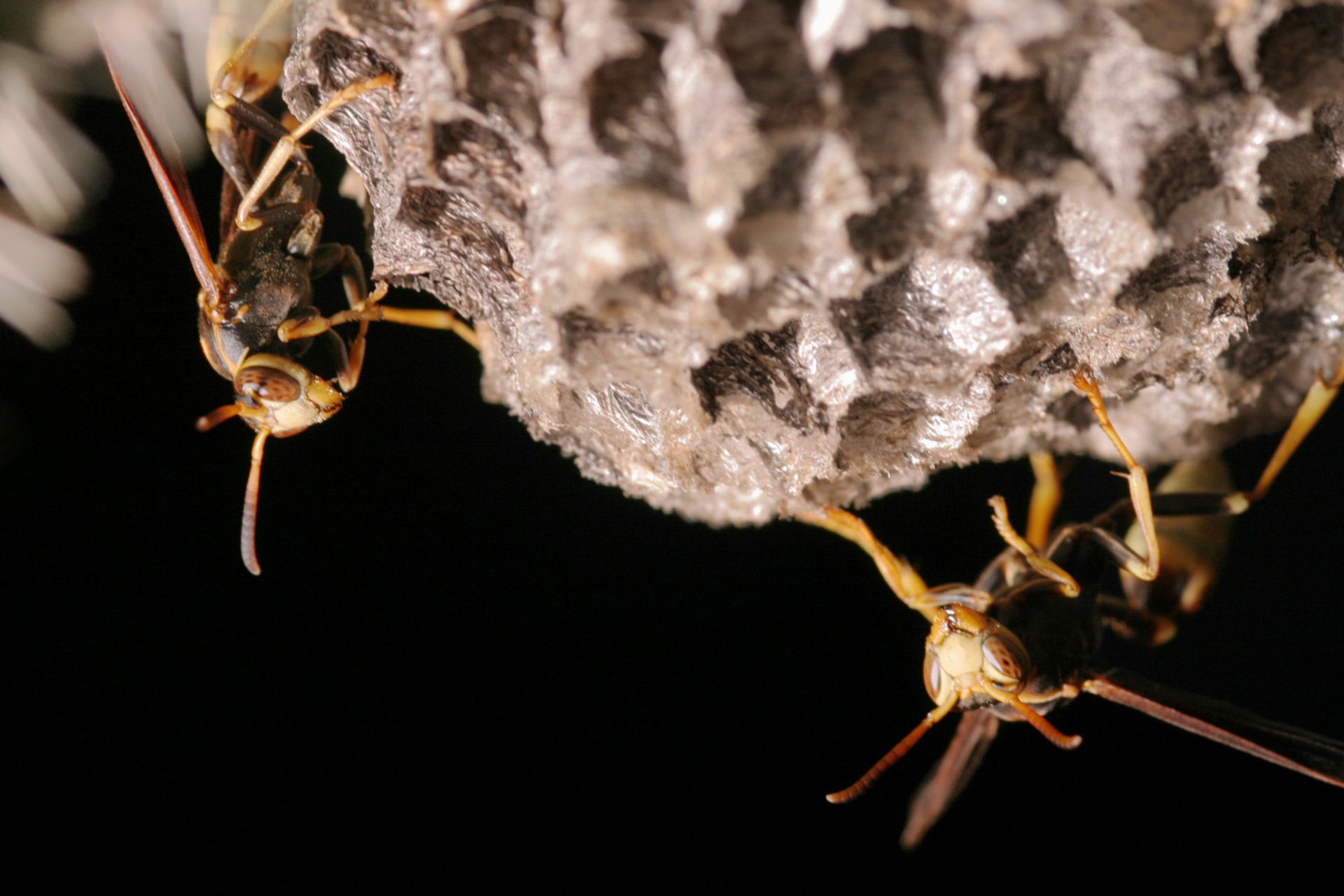
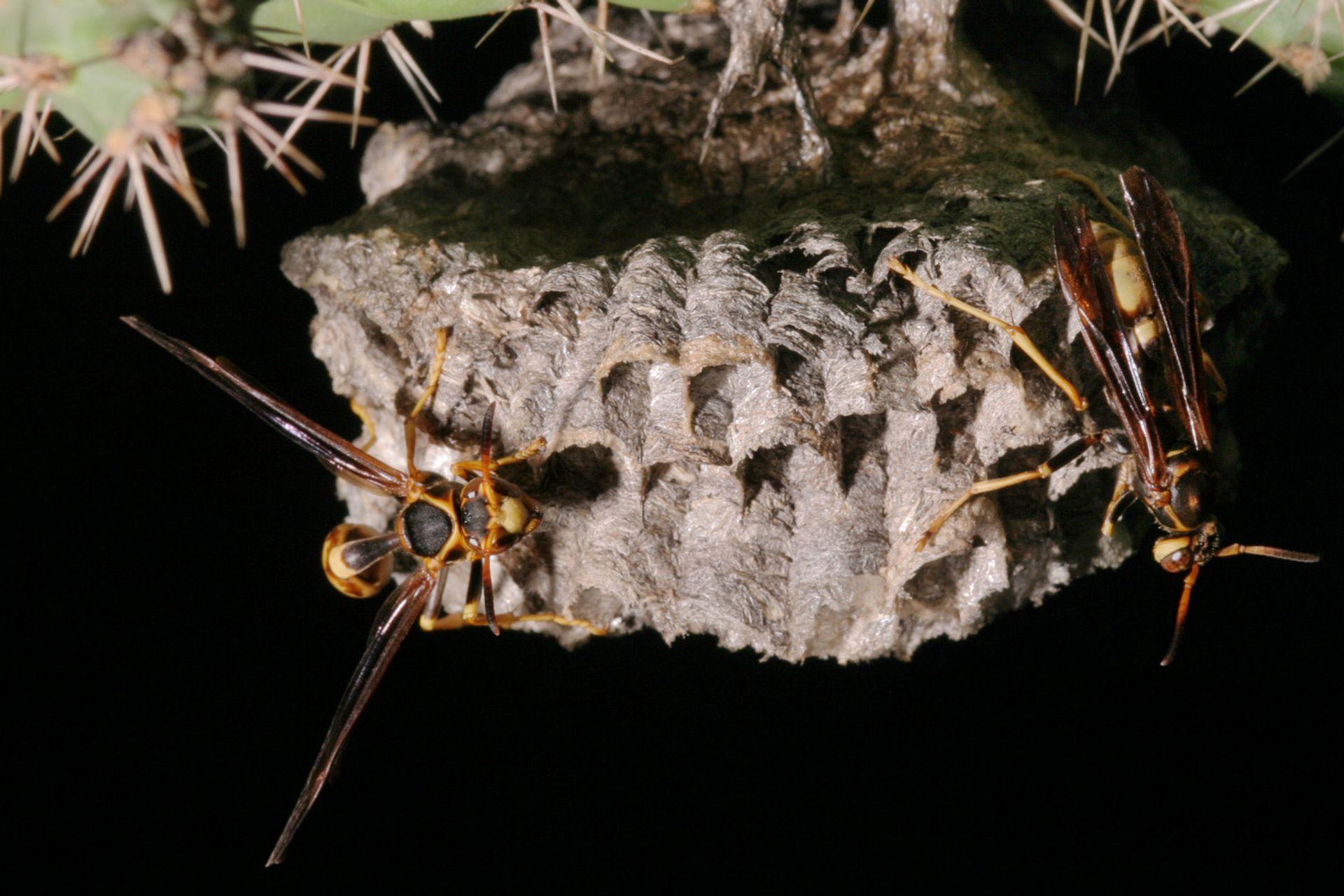
Mischocyttarus navajo is a of the Western Paper Wasp, Mischocyttarus flavitarsis, occurring in Arizona and Mexico. It is a social in the Vespidae that constructs small, uncovered paper combs for nesting. Like other members of its , it preys on caterpillars to feed its larvae and is active during warmer months.
Pronunciation
How to pronounce Mischocyttarus navajo: /ˌmɪskəˈsɪtərəs ˈnævəˌhoʊ/
These audio files are automatically generated. While they are not always 100% accurate, they are a good starting point.
Identification
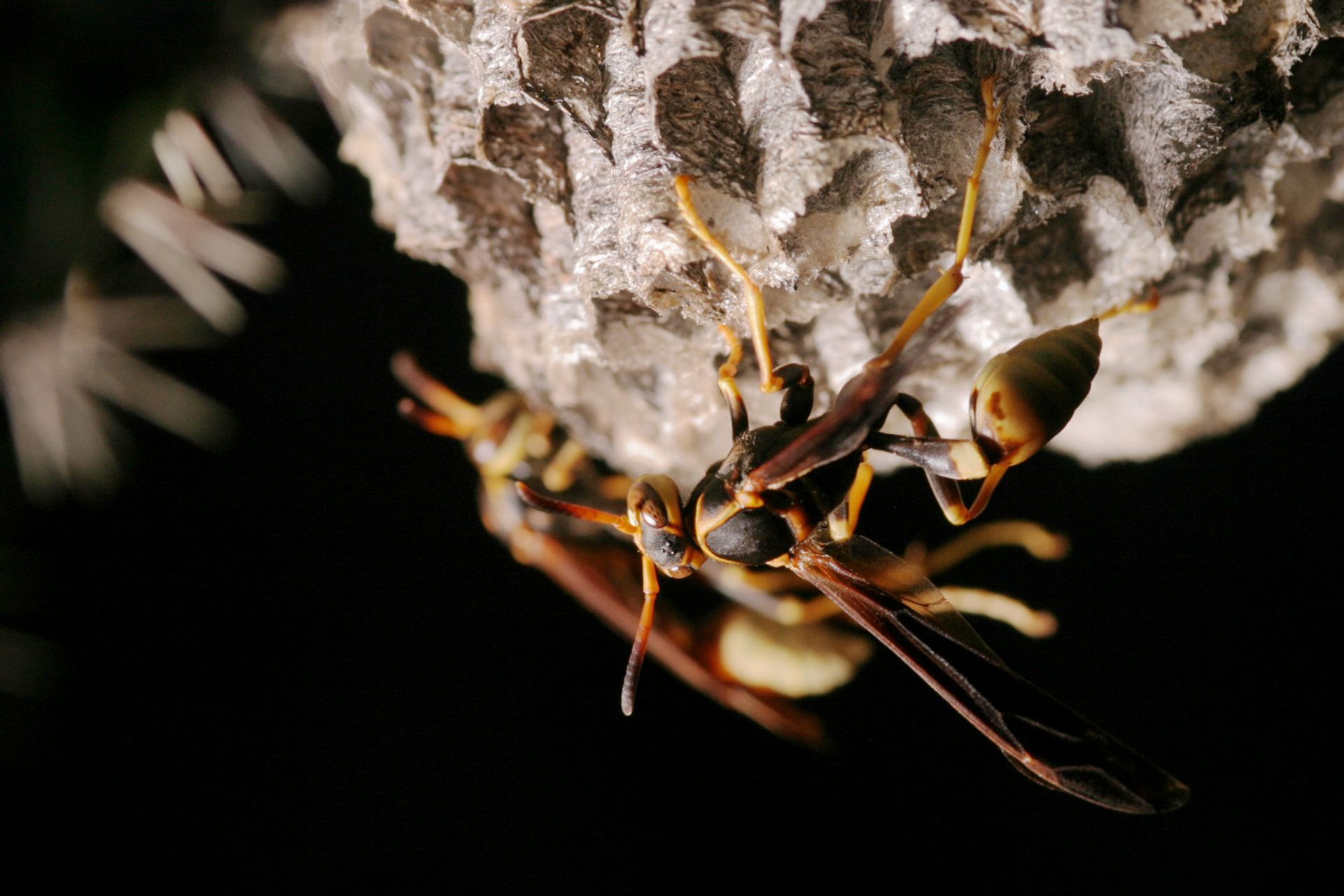
Distinguished from Polistes paper wasps by its stalked () versus the abdomen of Polistes. As a of Mischocyttarus flavitarsis, it is separated from the nominate subspecies M. f. flavitarsis by geographic occurrence in Arizona and Mexico. Males have longer, hooked and paler, more square compared to females with shorter antennae and darker, triangular faces.
Images
Appearance
Small to medium-sized paper wasp with a (stalked) , distinguishing it from the more abdomen of Polistes . As a of M. flavitarsis, it shares the general coloration and body plan of that species, though specific distinguishing features from the nominate subspecies are not well documented in available sources.
Habitat
Riparian corridors have been documented as typical locations for male patrolling . Nests are constructed in cavities or exposed locations depending on regional climate conditions.
Distribution
Arizona, United States and Mexico. The nominate M. flavitarsis flavitarsis ranges more broadly from British Columbia to Mexico, east to Nebraska and west Texas.
Seasonality
Active during warmer months; males patrol for mates in late summer. Females seek hibernation sites in autumn and overwinter as , emerging on warm winter days.
Diet
females prey primarily on caterpillars to feed larvae. Adults frequently consume sugary honeydew from colonies and visit flowers for nectar.
Life Cycle
Social colony cycle with queens founding nests in spring, producing , and rearing new queens and males in late summer. Males emerge in fall and form near hibernation sites. Entire colony cycle completes within one season; only fertilized females survive winter.
Behavior
Males patrol riparian corridors in late summer, scent-marking twigs and foliage with abdominal secretions, and vigorously defend marked territories from competing males. Males that emerge in fall form where each male scent-marks a perimeter roughly 10 cm in diameter; females freely choose mates without interference. Foraging females rely primarily on olfactory cues to detect prey, homing in on volatile chemicals from damaged plants and caterpillar .
Ecological Role
of caterpillars and other soft-bodied insects; contributes to of herbivorous larvae. serve as when visiting flowers and as consumers of honeydew.
Human Relevance
Generally non-aggressive and can be observed at close range without eliciting attack. Females may seek shelter in human structures such as attics for . Like other paper wasps, contributes to pest control by preying on caterpillars.
Similar Taxa
- Mischocyttarus flavitarsis flavitarsisNominate occurring in more northern and western range (British Columbia to Oregon, east to Nebraska); M. f. navajo restricted to Arizona and Mexico
- Polistes speciesSimilar overall appearance as paper wasps, but distinguished by (non-stalked) versus abdomen in Mischocyttarus
More Details
Taxonomic Note
Mischocyttarus navajo is currently treated as a of Mischocyttarus flavitarsis within the subgenus Phi. The Mischocyttarus contains roughly 260 and is most diverse in the neotropics; its classification has presented ongoing challenges to entomologists.
Nest Architecture
Constructs small, uncovered paper combs essentially identical to those of Polistes paper wasps. Nest site selection varies by region: in wetter climates, prefer cavity nests, while more exposed nests occur in drier regions.