
Stenodynerus blandoides
Bohart, 1943
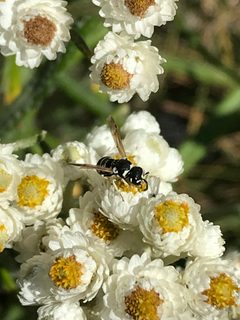
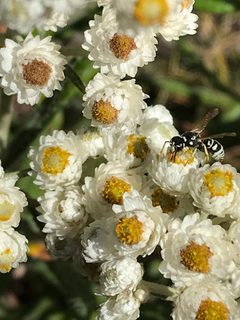
Stenodynerus blandoides is a of solitary mason wasp in the Eumeninae, described by Bohart in 1943. It is a small, cavity-nesting that provision nests with paralyzed caterpillars for its larval offspring. The species is difficult to distinguish from closely related such as Parancistrocerus based on live specimens alone. Like other eumenine wasps, it utilizes pre-existing tunnels in wood or hollow stems for nesting.
Pronunciation
How to pronounce Stenodynerus blandoides: /ˌstɛnəˈdaɪnərəs blænˈdɔɪdiːz/
These audio files are automatically generated. While they are not always 100% accurate, they are a good starting point.
Identification
Difficult to distinguish from Parancistrocerus from images of live specimens; microscopic examination of actual specimens often required for definitive identification. Males can be recognized by the modified terminal antennal segment. Smaller size and more patterning may help separate from some .
Images
Appearance
Small mason wasp with patterning. Males have the last antennal segment modified, appearing like a finger folded up against the adjacent segment. The is smaller and more ornately patterned than some . Live specimens are difficult to separate from Parancistrocerus species without microscopic examination.
Habitat
Utilizes pre-existing cavities in dead wood, hollow stems, or artificial blocks for nesting. Associated with flowering plants that provide nectar for .
Distribution
Recorded from western North America including Colorado and California. Specific range details are limited due to taxonomic confusion with related and scarcity of records.
Seasonality
active during summer months; observed in June in Colorado and California.
Diet
feed on nectar. Females provision nests with paralyzed caterpillars as food for larval offspring.
Life Cycle
Cavity-nesting : females construct in pre-existing tunnels, provision each cell with paralyzed caterpillars, lay an , and seal the cell. Multiple cells may be constructed in a single tunnel.
Behavior
Solitary nesting . Females hunt caterpillars, paralyze them with venom, and transport them to nest cavities. Males have been observed foraging on flowers.
Ecological Role
of caterpillars; contributes to natural control of lepidopteran . As a cavity-nesting , it may serve as for parasitic wasps including sapygids.
Human Relevance
Beneficial insect that helps control caterpillar pests. Occasionally utilizes artificial blocks or bee hotels. No documented negative impacts on humans.
Similar Taxa
- ParancistrocerusExtremely similar appearance; live specimens and even preserved specimens under microscopy are difficult to separate. Both are small, cavity-nesting eumenine with patterning.
- Stenodynerus other speciesCongeneric share general and ; identification to species level requires detailed examination.
More Details
Taxonomic Note
Catalogue of Life lists Stenodynerus blandoides as a synonym of Rhynchalastor blandoides, while GBIF treats it as a heterotypic synonym with Rhynchalastor blandoides as the accepted name. iNaturalist maintains it under Stenodynerus. Taxonomic resolution between these remains unsettled.
Identification Challenge
The difficulty of distinguishing Stenodynerus from Parancistrocerus in the field has been noted by multiple observers; this has likely led to underreporting and misidentification in citizen science records.