
Parazumia tolteca
(de Saussure, 1875)
Toltec Potter Wasp
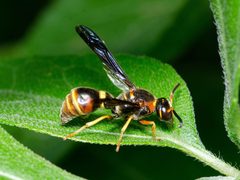
Parazumia tolteca is a of potter wasp in the Vespidae, Eumeninae. Commonly known as the Toltec Potter Wasp, this species was originally described by Henri de Saussure in 1875. As an eumenine , it constructs mud nests provisioned with paralyzed caterpillars for its larvae. The species occurs in western North America, with documented observations in Colorado and Arizona.
Pronunciation
How to pronounce Parazumia tolteca: /pæɹəˈzuːmiə tɒlˈtɛkə/
These audio files are automatically generated. While they are not always 100% accurate, they are a good starting point.
Images
Distribution
Documented from western North America including Colorado and Arizona. Observations have been recorded from McInnis Canyons National Conservation Area in western Colorado. The name 'tolteca' references the Toltec culture of central Mexico, suggesting historical or current range connections to this region.
Seasonality
Has been observed as a spring in western Colorado, with activity on flowering mustards along the Colorado River.
Host Associations
- Lepidoptera - preyEumenine provision nests with paralyzed caterpillars; specific records for P. tolteca are not documented in available sources
Life Cycle
As with other potter wasps, females construct mud nests, provision them with paralyzed caterpillars, and lay on the prey. Larvae develop on the provided food source.
Behavior
Observed visiting flowering mustards (Brassicaceae) for nectar. Females engage in nest construction and provisioning typical of the Eumeninae.
Ecological Role
Acts as a of caterpillars and may contribute to pollination through nectar feeding on flowers.
Human Relevance
Not documented as a pest or beneficial in agricultural contexts. Occasionally noted by naturalists and entomologists in western North America.
Similar Taxa
- Campsomeris toltecaFormerly or alternatively placed in Campsomeris; the name similarity and taxonomic history may cause confusion. Campsomeris are scoliid wasps, not eumenines, and are of scarab beetle rather than of caterpillars.
More Details
Taxonomic note
The was originally described by Henri de Saussure in 1875. The Parazumia is part of the diverse potter wasp Eumeninae. Some sources may reference this species under alternative generic placements due to historical taxonomic revisions.
Observation context
A notable observation by extension entomologist Melissa Schreiner identified this as her favorite insect, based on repeated encounters in McInnis Canyons National Conservation Area, western Colorado.