
Parancistrocerus pensylvanicus
(de Saussure, 1856)
Pennsylvania mason wasp
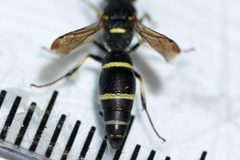
Parancistrocerus pensylvanicus is a solitary mason wasp in the Eumeninae. It is a cavity-nesting that provisions nests with paralyzed caterpillars as food for its larvae. The species has been documented in the northeastern United States, including Vermont. Like other members of its , it is difficult to distinguish from closely related species such as Stenodynerus without microscopic examination.
Pronunciation
How to pronounce Parancistrocerus pensylvanicus: //ˌpɛərənˌsɪstroʊˈsɪərəs pɛnˌsɪlˈvænɪkəs//
These audio files are automatically generated. While they are not always 100% accurate, they are a good starting point.
Identification
Difficult to distinguish from Stenodynerus and other Parancistrocerus based on images of live specimens; microscopic examination typically required for definitive identification.
Images
Distribution
Northeastern United States; documented in Vermont.
Diet
feed on nectar; larvae are fed paralyzed caterpillars.
Life Cycle
Nests in pre-existing cavities such as hollow twigs or borings; creates multiple within a tunnel, each provisioned with paralyzed caterpillars and sealed with partitions.
Behavior
Solitary; females hunt caterpillars, paralyze them with venom, and stock them in nest for larval consumption.
Ecological Role
of caterpillars; may contribute to of herbivorous larvae.
Human Relevance
May use artificial blocks or nesting boxes; contributes to caterpillar in gardens and natural areas.
Similar Taxa
- Stenodynerus speciesNearly identical appearance in live specimens; microscopic examination required for separation
- Parancistrocerus perennisSimilar size, coloration, and nesting ; distinguished by geographic range and subtle morphological features