Delta esuriens
(Fabricius, 1787)
Okinawa Mud Wasp
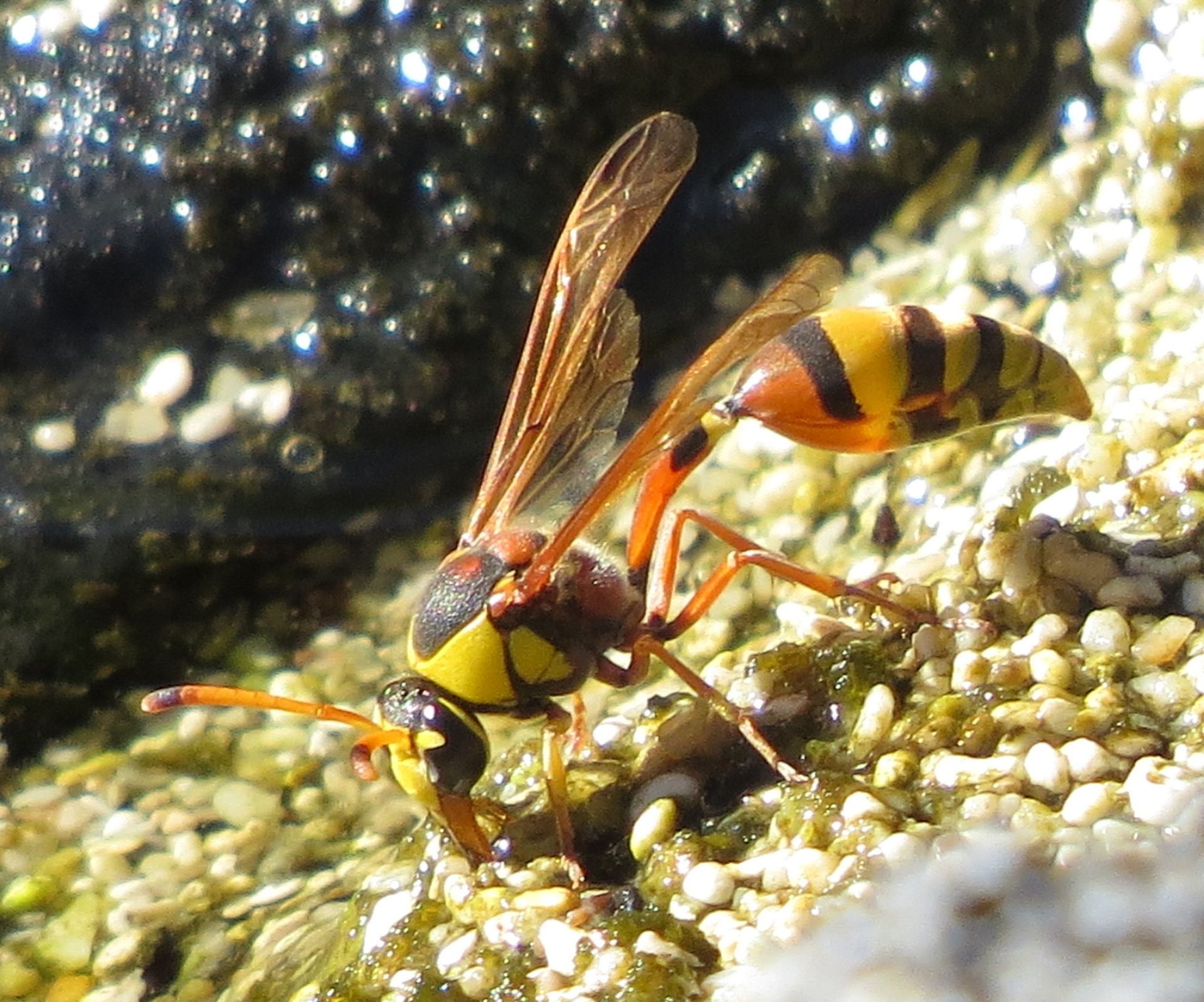
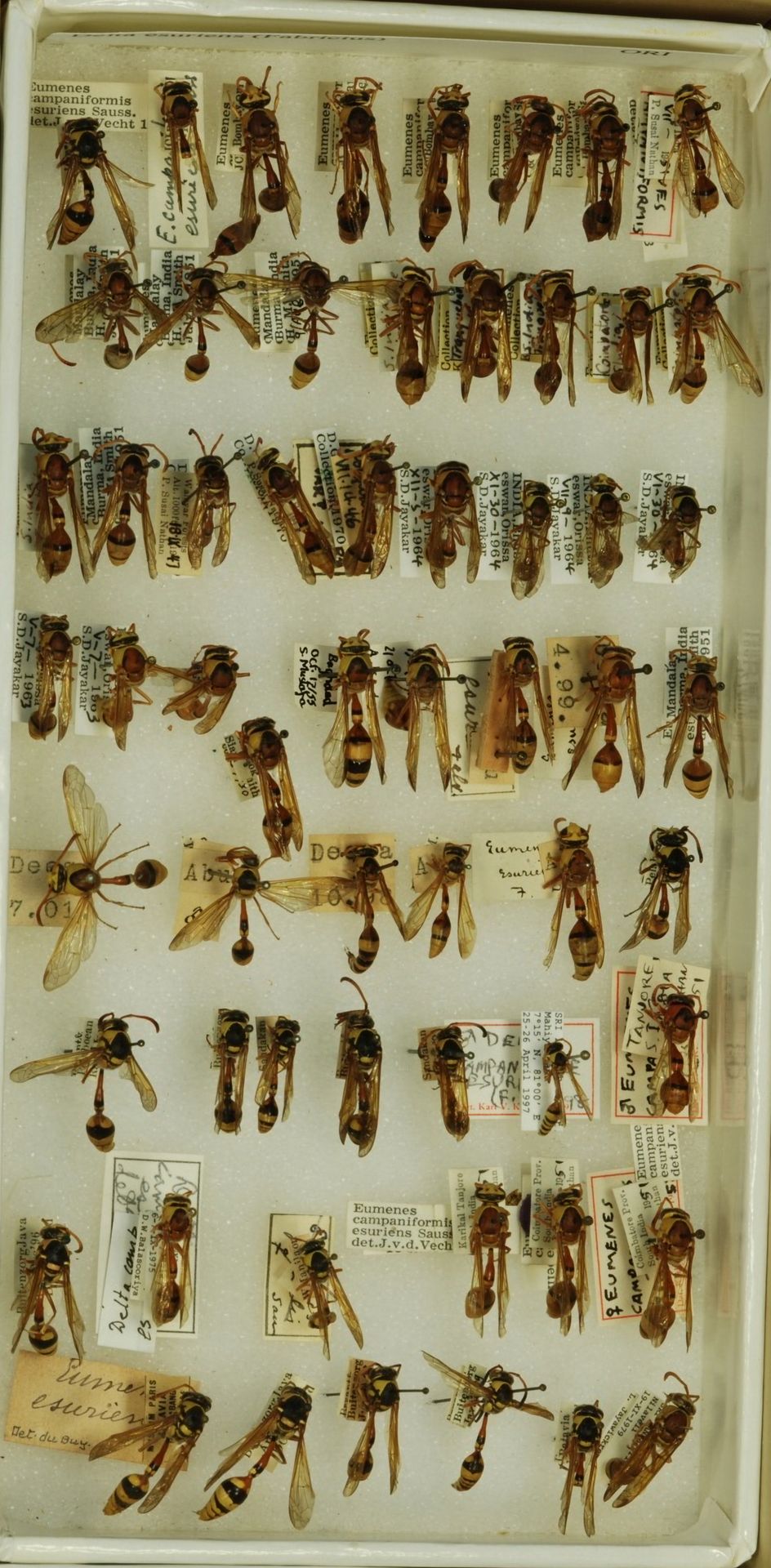
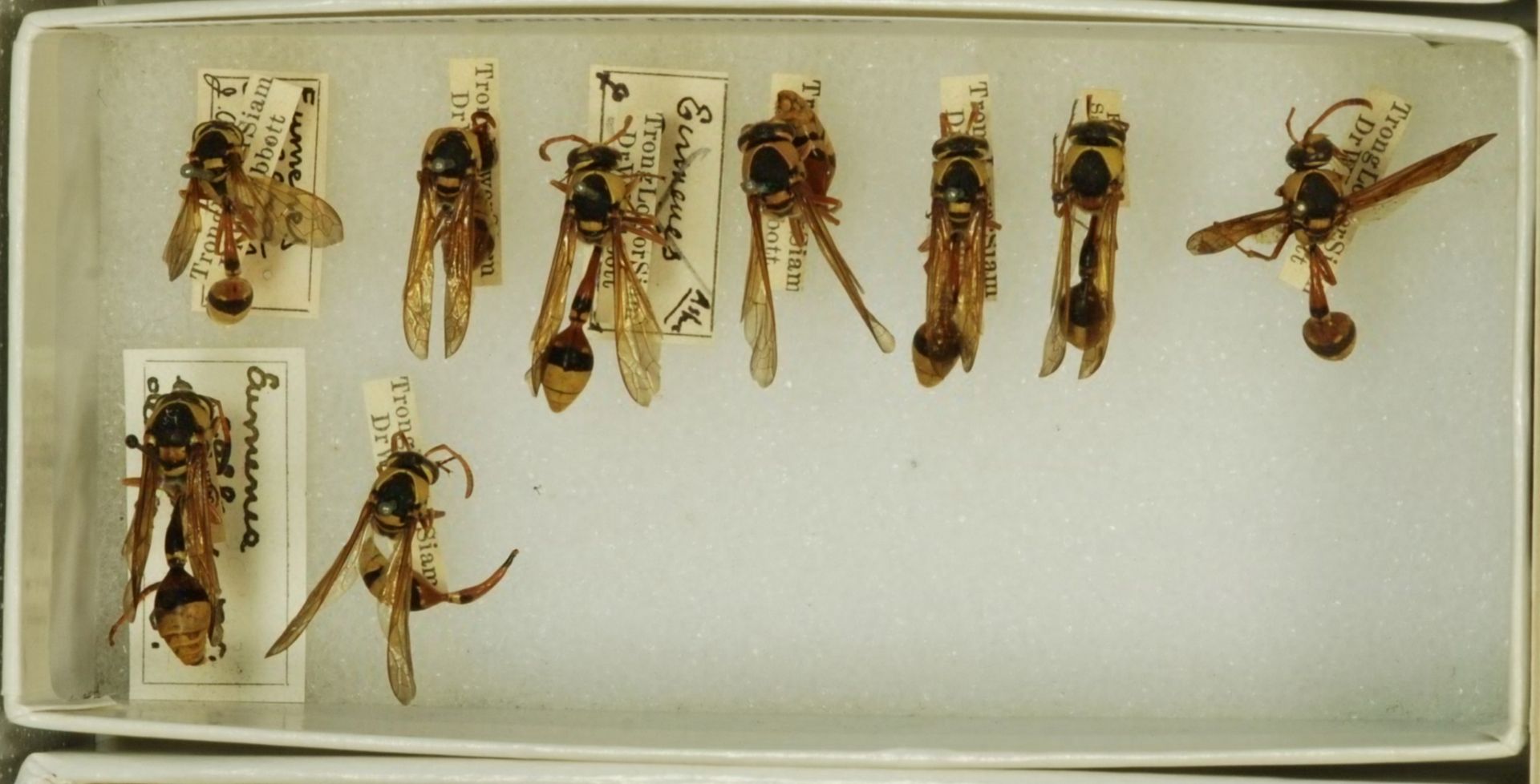
Delta esuriens is a potter wasp distributed across tropical Asia. Females construct mud nests with pot-shaped entrance holes, provisioning with lepidopteran caterpillars as food for developing larvae. The species is distinguished from the similar Delta pyriforme by a yellow band on the metasomal petiole. Development from to spans approximately one month, with males emerging earlier than females due to shorter development times.
Pronunciation
How to pronounce Delta esuriens: //ˈdɛltə ˈɛsjʊɹiːɛnz//
These audio files are automatically generated. While they are not always 100% accurate, they are a good starting point.
Identification
Distinguished from Delta pyriforme by the presence of a yellow band on the metasomal petiole segment.
Images
Distribution
Tropical Asia; documented from India with expanded distributional records in Indian states.
Diet
Lepidopteran caterpillars provisioned in nest .
Life Cycle
Females lay suspended from walls by silk. Eggs hatch in approximately two days. Larvae feed for one week on provisioned caterpillars. requires about two weeks. emerge from cells in approximately one month. Male offspring have shorter development times and emerge earlier than females.
Behavior
Females build mud nests containing 1-8 arranged adjacently in 1 or 2 rows. Entrance holes are pot-shaped. Cells are provisioned with caterpillars before laying, after which the entrance is sealed.
Similar Taxa
- Delta pyriformeSimilar appearance; distinguished by absence of yellow band on metasomal petiole
More Details
Nest parasitism and predation
Larvae are parasitized by Chrysididae and Bombyliidae, and preyed upon by Sarcophagidae and ants.
Sources and further reading
- BugGuide
- Wikipedia
- GBIF taxonomy match
- iNaturalist taxon
- NCBI Taxonomy
- Catalogue of Life
- Emily Bick: Salinity, the Water Hyacinth and a Weevil | Bug Squad
- Scientific Annals of the Danube Delta Institute | Blog
- Field Tour Gets First-Hand Look at IPM and Pollinator Health in Mississippi
- Assessments of alien species impacts are reliable to prioritize resources | Blog
- diamond open access | Blog
- Cicindela scutellaris lecontei x scutellaris unicolor intergrades in southeast Missouri | Beetles In The Bush
- Redescription and New Distributional Records of <I>Delta esuriens</I> (Fabricius) (Hymenoptera: Vespidae: Eumeninae) from Indian States
- Biology of the potter wasp Delta esuriens (Fabricius, 1787) (Hymenoptera: Vespidae: Eumeninae) with details on its nesting and mating behaviours, development, and ecology