
Taeniogonalos
Schulz, 1906
Species Guides
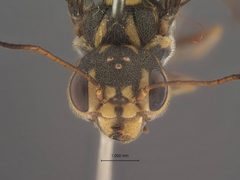
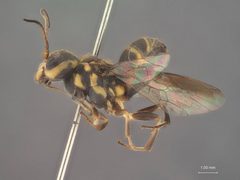
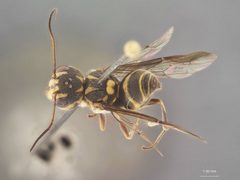
1Taeniogonalos is a of in the Trigonalidae, comprising approximately 53 described distributed across multiple continents. Species in this genus exhibit unusual , including both primary and facultative hyperparasitism. Some species, such as T. venatoria, reproduce via with extremely skewed sex ratios. The genus is characterized by distinctive morphological features that distinguish it from other trigonalyid genera.
Pronunciation
How to pronounce Taeniogonalos: /ˌtaɪniːoʊˈɡænələs/
These audio files are automatically generated. While they are not always 100% accurate, they are a good starting point.
Images
Distribution
occur in Australia, India, Sri Lanka, China, Taiwan, North America (including Vermont, USA), and Africa. The has a broad geographic range spanning multiple biogeographic regions.
Life Cycle
In T. venatoria, are oviposited onto foliage and ingested by larvae, then hatch and penetrate the gut wall. Larval instars 1-3 are endoparasitic; instars 4-5 are ectoparasitic. are , with synchronized to host .
Behavior
remain viable on foliage for up to 5 months. are relatively short-lived (approximately 8 days), with survival increased by access to water and food.
Ecological Role
Primary and facultative hyperparasitoid. At least one (T. venatoria) parasitizes pergid larvae. T. gundlachii has been recorded as a hyperparasitoid of Hyalophora cecropia (Saturniidae).
Sources and further reading
- BugGuide
- Wikipedia
- GBIF taxonomy match
- iNaturalist taxon
- NCBI Taxonomy
- Primary Parasitism, Development and Adult Biology in the Wasp Taeniogonalos Venatoria Riek (Hymenoptera: Trigonalyidae)
- Thelytoky in Taeniogonalos venatoria Riek (Hymenoptera: Trigonalyidae), with Notes on its Distribution and First Description of Males
- Description of a new species of Taeniogonalos Schulz (Hymenoptera: Trigonalidae) from South India with an updated key to Indian species
- First Report of the Hyperparasitoid Taeniogonalos gundlachii Cresson (Hymenoptera: Trigonalidae) from Hyalophora cecropia L. (Lepidoptera: Saturniidae)