
Epomidiopteron
Romand, 1835
Species Guides
1Epomidiopteron is a of solitary in the Tiphiidae, established by Romand in 1835. Members of this genus are wasps, with females laying on or near scarab beetle larvae that serve as for their developing young. The genus is relatively poorly documented compared to other tiphiid genera, with limited -level taxonomic revision in recent decades.
Pronunciation
How to pronounce Epomidiopteron: /ˌe.pɔˌmɪ.diˈɒp.təˌrɒn/
These audio files are automatically generated. While they are not always 100% accurate, they are a good starting point.
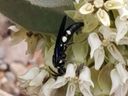
Images
Distribution
Records from iNaturalist suggest presence in multiple regions, though specific range boundaries remain undocumented. The likely occurs wherever suitable scarab beetle and appropriate soil conditions for nesting are found.
Host Associations
- Scarabaeidae - Larvae of scarab beetles serve as ; females paralyze host larvae and deposit on them
Life Cycle
Females seek out scarab beetle larvae in soil, paralyze them with a sting, and deposit on the immobilized . The larva consumes the host larva, eventually killing it before pupating.
Behavior
Females are ground-nesting and engage in -searching in soil or decaying organic matter where scarab larvae occur. Males may exhibit hill-topping or patrolling behavior typical of tiphiid wasps, though this has not been specifically documented for Epomidiopteron.
Ecological Role
As of scarab beetle larvae, in this contribute to natural suppression of scarab , including some species that are agricultural or horticultural pests.
Human Relevance
Potential agents for pest scarab , though specific applications have not been developed. Stings to humans are possible but uncommon given their solitary, ground-nesting habits.
Similar Taxa
More Details
Taxonomic uncertainty
The has received limited modern taxonomic attention. boundaries and relationships within Epomidiopteron remain poorly resolved, and some species may be synonymized or reclassified with further study.
Host specificity
records are sparse and often based on limited observations; the full range of scarab hosts utilized by different Epomidiopteron is not well characterized.