
Tiphiinae
Genus Guides
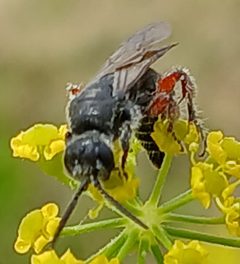
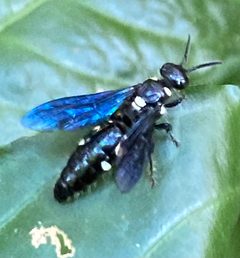
4Tiphiinae is the larger of two in the Tiphiidae, with worldwide distribution. Members are small to medium solitary , up to 25 mm in length. The subfamily includes approximately twelve , with Tiphia being the most -rich and widely studied. Males possess wings; females may be winged or wingless, with wingless females showing distinct thoracic segmentation.
Pronunciation
How to pronounce Tiphiinae: /ˈtɪfɪɪˌneɪ/
These audio files are automatically generated. While they are not always 100% accurate, they are a good starting point.
Identification
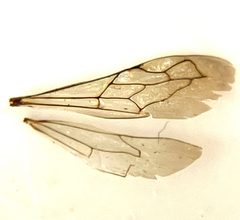
Males have 10-13 antennal segments, females 10-12. may be straight or sharply angled. are ovate without emargination. Pronotum is elongated, extending posteriorly toward tegulae, with cover lobes bearing close fine hairs. No on mesopleuron. typically orange-red or black. Wingless females have distinct thoracic segmentation. Fore not obviously thickened. Wings, when present, not folded longitudinally; forewings with distinct pterostigma and well-developed venation.
Images
Distribution
Worldwide.
Similar Taxa
- BrachycistidinaeThe other of Tiphiidae; restricted to the Nearctic region, whereas Tiphiinae has worldwide distribution.