
Sierolomorpha
Ashmead, 1903
Species Guides
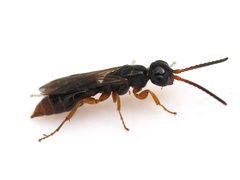
2Sierolomorpha is the sole of Sierolomorphidae, a of rare containing approximately 10 described . These wasps are restricted to the Northern Hemisphere and are among the least known hymenopterans. Their remains largely undocumented due to their scarcity and the difficulty of locating specimens.
Pronunciation
How to pronounce Sierolomorpha: //sɪəˈrɒləmɔrfə//
These audio files are automatically generated. While they are not always 100% accurate, they are a good starting point.
Identification
Sierolomorpha are distinguished from other small by a combination of reduced wing venation, a compact body form, and specific antennal segment proportions. They lack the elongated ovipositors seen in many ichneumonid relatives and show distinctive mandibular structure. Definitive identification requires examination of microscopic morphological features and comparison with .
Images
Distribution
Northern Hemisphere, with records from North America and Eurasia. Specific countries with documented specimens include the United States, Canada, and parts of Europe.
Ecological Role
Presumed , though associations remain undocumented. Likely functions as a regulator of unknown host insects based on -level characteristics of related Hymenoptera.
Human Relevance
No documented economic or agricultural significance. Of interest primarily to hymenopteran systematists and biodiversity researchers due to its phylogenetic position and rarity.
Similar Taxa
- Ichneumonoidea (ichneumon wasps)Similar body plan and lifestyle, but Sierolomorpha has reduced wing venation and was historically classified separately due to distinct morphological features now recognized as -level differences.
- CeraphronoideaSmall size and reduced wing venation overlap, but Sierolomorphidae shows unique mandibular and antennal characteristics that separate it at the superfamily level.
More Details
Taxonomic history
The Sierolomorphidae was long considered enigmatic, with placement within Hymenoptera debated. Molecular and morphological studies now place it as sister to Ceraphronoidea, though relationships remain uncertain.
Research challenges
The extreme rarity of specimens—fewer than 100 documented specimens worldwide for some —severely limits biological study. Most knowledge derives from museum specimens rather than field observations.