
Dolerus nitens
Zaddach, 1859
Shining Griever
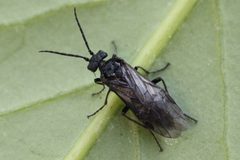
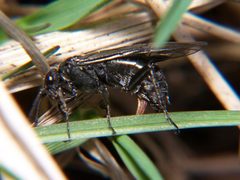
Dolerus nitens is a Palearctic in the Tenthredinidae, commonly known as the Shining Griever. The species has been introduced to North America and is now established in Canada, with confirmed records from British Columbia, Newfoundland, Ontario, and Prince Edward Island. Like other members of the Dolerus, this species is a herbivorous sawfly whose larvae feed on grasses and sedges.
Pronunciation
How to pronounce Dolerus nitens: /dɒˈlɛrəs ˈnaɪtɛnz/
These audio files are automatically generated. While they are not always 100% accurate, they are a good starting point.
Identification
The Dolerus can be distinguished from other genera by features of the structure and wing venation. -level identification within Dolerus typically requires examination of genitalia and other microscopic characters. D. nitens is one of several Dolerus species introduced to North America from the Palearctic region.
Images
Habitat
As a member of the Dolerus, this is associated with grassland and meadow where larval plants (grasses and sedges in the Poaceae and Cyperaceae) are abundant. Specific habitat preferences for D. nitens in its introduced North American range have not been detailed in the available literature.
Distribution
Native to the Palearctic region. Introduced and established in Canada with records from British Columbia, Newfoundland, Ontario, and Prince Edward Island. The appears to be expanding its range in North America, though the full extent of its distribution is not well documented.
Diet
Larvae feed on grasses and sedges (Poaceae and Cyperaceae), typical for the Dolerus. Specific plant records for D. nitens are not detailed in the available sources.
Life Cycle
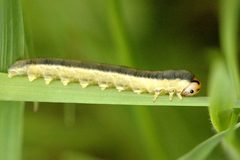
As a (suborder ), D. nitens has a typical sawfly with larvae that resemble caterpillars but possess a greater number of (six or more pairs) compared to lepidopteran caterpillars. occurs in soil or plant material. are active during the growing season, though specific for this is not documented in the available sources.
Ecological Role
As a herbivore, larvae contribute to nutrient cycling in grassland . The may compete with native North American and other herbivores for plant resources, though specific ecological impacts have not been studied.
Human Relevance
The is of interest to entomologists tracking the establishment and spread of introduced Palearctic insects in North America. No economic or agricultural significance has been reported.
Similar Taxa
- Other Dolerus speciesWithin the Dolerus, are morphologically similar and often require microscopic examination for accurate identification. D. nitens may be confused with other introduced Dolerus species in North America, as well as native Nearctic species.
- Lepidopteran caterpillarsDolerus larvae ( larvae) resemble caterpillars but can be distinguished by having six or more pairs of , compared to five or fewer pairs in Lepidoptera larvae.
More Details
Taxonomic Note
The Dolerus is part of the Tenthredinidae, one of the largest families of . Members of this genus are commonly referred to as 'grievers,' though the origin of this is unclear.
Introduction History
The timing and mechanism of D. nitens introduction to North America are not documented in the available sources. The was likely introduced accidentally, possibly through human transport of plant material or soil containing larvae or pupae.