
Dolerus neoagcistus
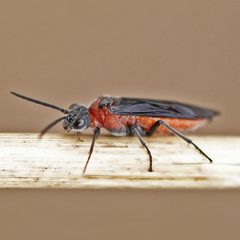
Dolerus neoagcistus is a of in the Tenthredinidae. Sawflies are non-stinging relatives of , bees, and ants, distinguished from other Hymenoptera by a broad connection between the and (lacking the narrow 'wasp waist'). As a member of the Dolerus, this species is part of a group whose larvae are herbivorous and often resemble caterpillars. The species has been documented in 11 observations on iNaturalist, indicating it is relatively rarely recorded.
Pronunciation
How to pronounce Dolerus neoagcistus: //dɒˈlɛrəs ˌniːoʊæɡˈsɪstəs//
These audio files are automatically generated. While they are not always 100% accurate, they are a good starting point.
Identification
Larvae of Dolerus , including D. neoagcistus, can be distinguished from Lepidoptera caterpillars by having six or more pairs of , whereas and caterpillars have five or fewer pairs. in this lack the constricted petiole (' waist') characteristic of many other Hymenoptera. Specific adult identification features for D. neoagcistus are not well documented in available sources.
Images
Life Cycle
typically have a complete with , larval, pupal, and stages. Dolerus larvae are generally herbivorous, though specific plants for D. neoagcistus have not been documented in available sources.
Ecological Role
As herbivores, Dolerus larvae contribute to nutrient cycling and plant dynamics. Their specific ecological role has not been studied in detail.
Similar Taxa
- Lepidoptera caterpillars larvae are frequently mistaken for or caterpillars due to their similar body form. The critical distinguishing feature is the number of : Dolerus larvae have six or more pairs, while Lepidoptera caterpillars have five or fewer pairs.
- Other Dolerus species within the Dolerus are morphologically similar and often require detailed examination or expert identification to distinguish. The genus is characterized by with metallic coloration and larvae with multiple pairs.
More Details
Data availability
This has limited published information. The iNaturalist platform records 11 observations, suggesting it is either genuinely rare, under-recorded, or difficult to identify. No Wikipedia summary exists for this species.