
Euura californica
Willow Apple Gall Sawfly
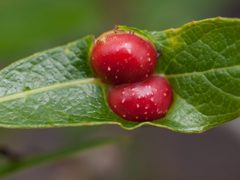
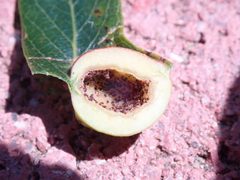
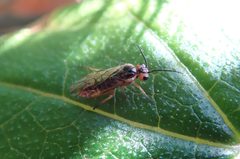
Euura californica, the willow apple gall , is a tenthredinid sawfly that induces distinctive galls on arroyo willow (Salix lasiolepis). Females oviposit into leaf tissue, triggering the formation of rounded, apple-like galls that enclose developing larvae. The exhibits multivoltine breeding with up to six annually in favorable climates. emerge through exit holes chewed in mature galls.
Pronunciation
How to pronounce Euura californica: //ˈjʊərə ˌkælɪˈfɔːrnɪkə//
These audio files are automatically generated. While they are not always 100% accurate, they are a good starting point.
Identification
The gall is diagnostic: a rounded, fleshy, apple-like structure (5–15 mm diameter) on arroyo willow leaves, often with a visible exit hole when mature. The itself is small, typical of Euura, but specific morphological characters distinguishing it from require examination. Gall presence on arroyo willow separates it from other willow-associated Euura with differently shaped galls.
Images
Habitat
Associated with arroyo willow (Salix lasiolepis) in riparian corridors, stream banks, and wetland edges. Requires standing water or saturated soils supporting willow growth.
Distribution
Western North America; documented from California and adjacent regions where arroyo willow occurs.
Seasonality
Year-round breeding activity reported; multivoltine with overlapping . Peak gall formation and patterns vary by locality and climate.
Diet
Larvae feed internally on gall tissue induced in arroyo willow leaves. do not feed; larval nutrition derived entirely from willow tissue.
Host Associations
- Salix lasiolepis - gall inductionarroyo willow; exclusive for gall formation
Life Cycle
deposited in willow leaf tissue stimulate gall formation. Larvae develop within gall chambers, feeding on nutritive tissue. occurs inside gall. chew circular exit holes to emerge. Multiple per year possible; no requirement indicated.
Behavior
Females initiate gall formation through oviposition; the plant's wound response creates the larval nursery. exhibit phylloxerine , exiting through pre-cut holes.
Ecological Role
Induces phytocecidia on willows, creating microhabitats for and . Gall tissue represents carbon and nutrient by the plant; larvae function as herbivores with localized impact.
Human Relevance
Minor significance; galls may attract attention due to conspicuous appearance on ornamental willows. No economic damage to timber or fiber crops documented.
Similar Taxa
- Euura amerinaeInduces elongate, beaked galls on Salix ; gall distinct from rounded apple form of E. californica
- Pontania spp.Related tenthredinid gallers on willows; produce leaf fold or blister galls rather than discrete spherical structures
More Details
Gall development
The 'apple gall' represents a modified leaf blade; histological studies show extensive vascular proliferation and nutritive tissue layers surrounding the larval chamber.
Generation time
Six- cycle reported from mild coastal California localities; fewer generations expected in cooler or more continental climates.
Sources and further reading
- BugGuide
- Wikipedia
- iNaturalist taxon
- The Big 43: The California Native Plants, Plus One, Studied in UC Davis Research | Bug Squad
- Bohart Museum: Learn about California's State Insect on UC Davis Picnic Day | Bug Squad
- A Mural Like No Other | Bug Squad
- A Flash of Orange: Welcome, California Tortoiseshell! | Bug Squad
- California Dogface Butterfly: What the Fire Did | Bug Squad
- Bembicid Holdings | Entomology Research Museum