
Fenusella nana
(Klug, 1816)
Early Birch Leaf Edgeminer
Fenusella nana is a Palearctic in the Tenthredinidae. It occurs throughout the British Isles and has been recorded across continental Europe including Belgium. The species is commonly known as the Early Birch Leaf Edgeminer, indicating its association with birch foliage. As a member of the Fenusinae, it exhibits the typical sawfly characteristic of a broad connection between the and , lacking the narrow ' waist' of .
Pronunciation
How to pronounce Fenusella nana: /fəˈnuːsɛlə ˈnænə/
These audio files are automatically generated. While they are not always 100% accurate, they are a good starting point.
Identification
Fenusella nana can be distinguished from other Fenusella by its small size and specific wing venation patterns characteristic of the . The species name 'nana' refers to its diminutive stature. Accurate identification typically requires examination of morphological features including structure and saw (ovipositor) characteristics. It may be separated from similar birch-associated by timing and larval mine .
Images
Habitat
Associated with birch (Betula) woodlands and areas where birch trees are present. The requires living birch foliage for larval development.
Distribution
Palearctic distribution. Recorded throughout the British Isles. Present in Belgium including Brussels-Capital Region, Flemish Region, and Walloon Region. Distribution records also indicate presence in Canada, though this may represent introduced or detection records.
Seasonality
The 'Early Birch Leaf Edgeminer' suggests early-season activity, with likely emerging and ovipositing in spring when birch foliage is fresh and suitable for larval mining.
Diet
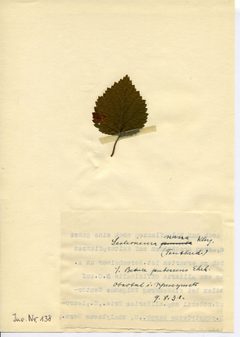
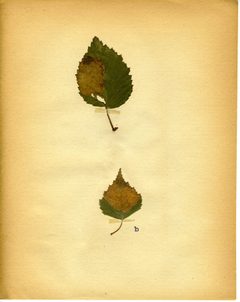
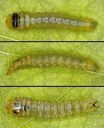
Larvae feed internally in birch leaves, creating blotch mines or feeding along leaf edges. The specific feeding pattern of 'edgemining' distinguishes this from related leaf miners.
Host Associations
- Betula - Birch are the larval plants. Larvae mine within birch leaves.
Life Cycle
Typical of : are inserted into birch leaves, larvae develop through feeding stages within leaf tissue, occurs in soil or leaf litter, and emerge to mate and oviposit. Specific timing and number of per year require further documentation.
Behavior
females use their saw-like ovipositor to insert into birch leaf tissue. Larvae are endophagous, feeding concealed within leaf mines. This mining provides protection from and desiccation.
Ecological Role
As a primary consumer of birch foliage, larvae contribute to nutrient cycling through leaf damage and subsequent abscission. The serves as prey for and other natural enemies that attack leaf-mining larvae. Its specialized association with birch makes it a component of birch woodland .
Human Relevance
Minor economic significance. Leaf mining damage is typically cosmetic rather than causing serious tree health impacts. The may be encountered by arborists and foresters monitoring birch health. iNaturalist observations (663 records) indicate it is moderately well-documented by citizen scientists.
Similar Taxa
- Other Fenusella speciesCongeneric share similar and birch association; distinguished by subtle morphological differences and possibly timing
- Other Tenthredinidae leaf miners on birchMultiple mine birch leaves; Fenusella nana specifically identified by combination of small size, early-season activity, and edgemining
More Details
Taxonomic history
First described by Klug in 1816, with the epithet 'nana' reflecting its small size relative to related .
Observation frequency
The has accumulated 663 iNaturalist observations, indicating it is regularly encountered and photographed by naturalists, though less conspicuous than many larger Hymenoptera.
Sources and further reading
- BugGuide
- Wikipedia
- GBIF taxonomy match
- iNaturalist taxon
- NCBI Taxonomy
- The Hornet Wars: 'A Bloody Dumpster Fire' | Bug Squad
- Murder Hornets: Murder in the First Degree? | Bug Squad
- Lynn Kimsey Sheds Light on Asian Giant Hornets | Bug Squad
- Wasps, Wasps, Wasps: Weird and Wonderful Wasps | Bug Squad
- Trapping the Asian Giant Hornet | Bug Squad
- Bug Eric: The Problem With "Murder"....Anything