Macremphytus tarsatus
(Say, 1836)
dogwood sawfly
Macremphytus tarsatus, commonly known as the dogwood , is a leaf-feeding sawfly native to eastern North America. Its larvae are significant defoliators of dogwood (Cornus spp.), particularly grey dogwood (Cornus racemosa), silky dogwood (Cornus amomum), and flowering dogwood (Cornus florida). The species exhibits a complex involving dramatic changes in larval appearance and an unusual strategy in which mature larvae bore into wood to construct chambers. emerge in late spring to early summer and females deposit large masses on leaf undersides.
Pronunciation
How to pronounce Macremphytus tarsatus: /mæˈkrɛmfɪtəs tɑrˈseɪtəs/
These audio files are automatically generated. While they are not always 100% accurate, they are a good starting point.
Identification
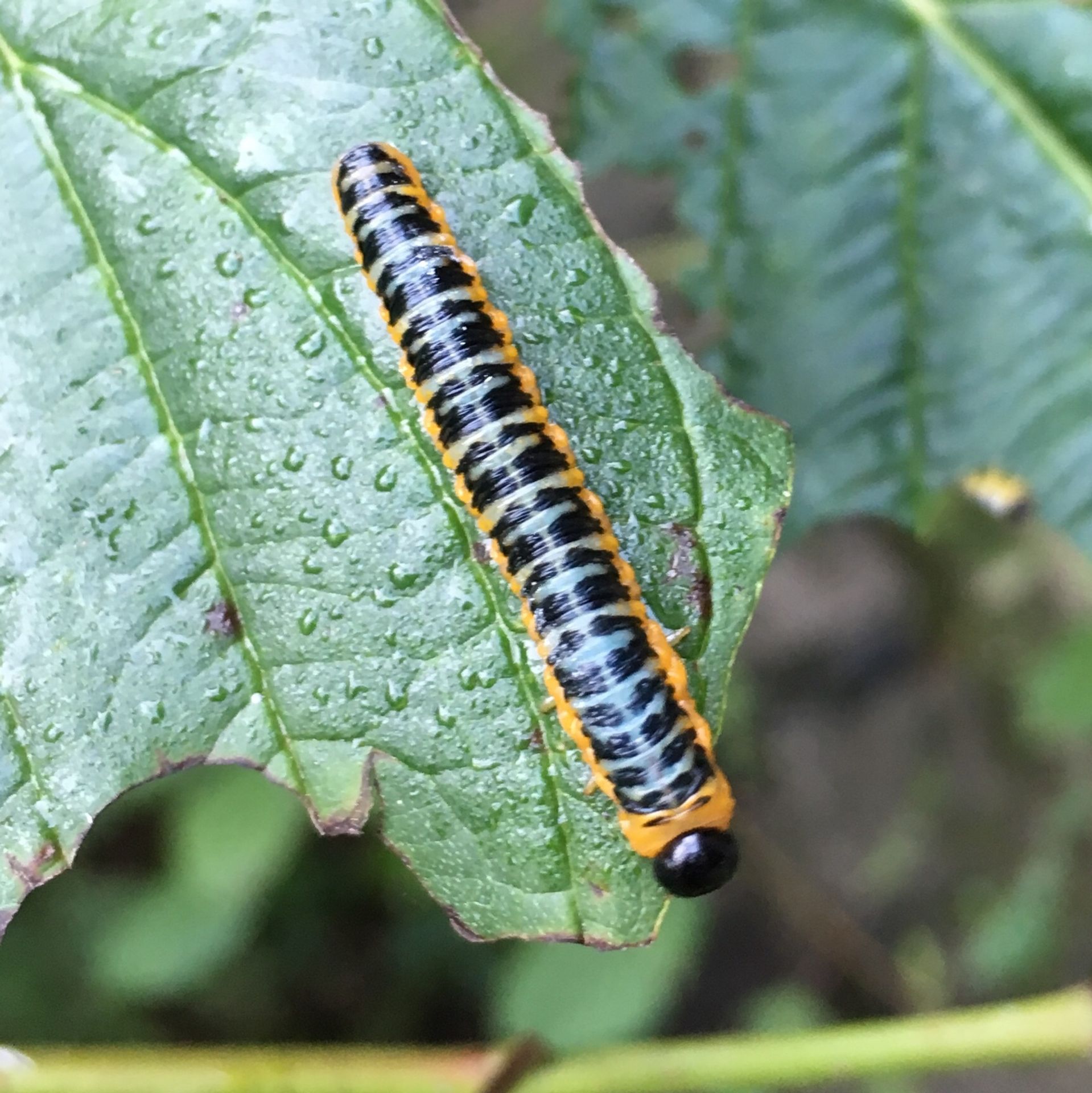
Distinguished from caterpillars (Lepidoptera larvae) by having six or more pairs of rather than five or fewer. The white waxy coating of intermediate instars and the subsequent yellow-white-black pattern of mature larvae are distinctive. Larvae often assume a characteristic curled or snaky posture when resting. Presence on dogwood (Cornus spp.) provides a strong clue. resemble small but lack the constricted waist of many wasps and have -typical .
Images
Appearance
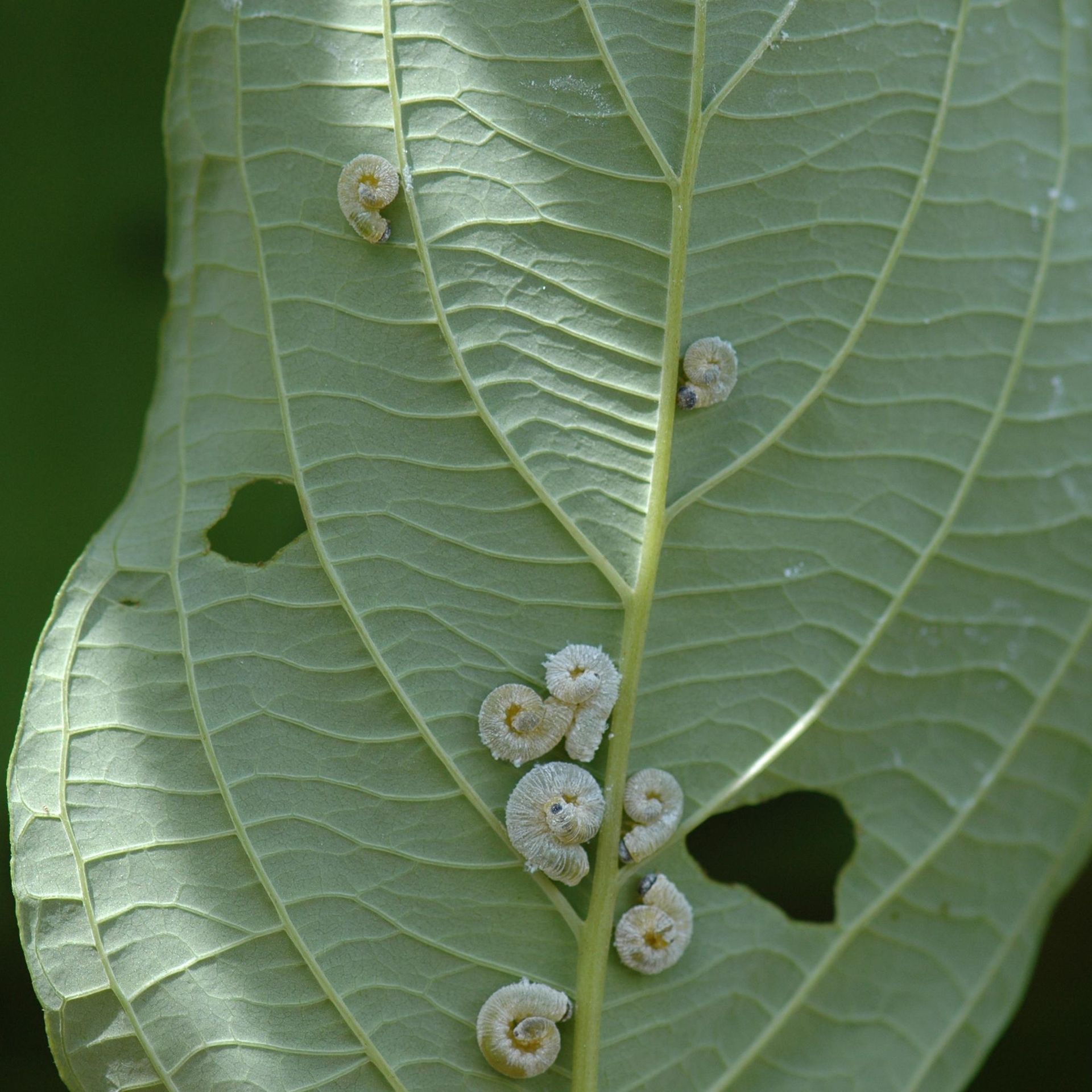
are small, -like insects with typical . Larvae undergo striking color changes through development: newly hatched larvae are translucent yellowish, resembling gummy worms; intermediate instars develop a dense, snowy-white waxy coating that gives a fluffy, bird-dropping-like appearance; mature larvae shed this wax and display a bold pattern of yellow, white, and black. Larvae have six or more pairs of fleshy on abdominal segments (distinguishing them from caterpillars, which have five or fewer pairs).
Distribution
Eastern North America. Documented from the northeastern United States through the mid-Atlantic region, with records from Maryland, Virginia, and surrounding areas.
Seasonality
active from May through July. Larvae present and feeding through summer months. Mature larvae seek sites in wood during autumn before leaf drop. Winter spent as larvae in wood chambers; occurs in spring.
Diet
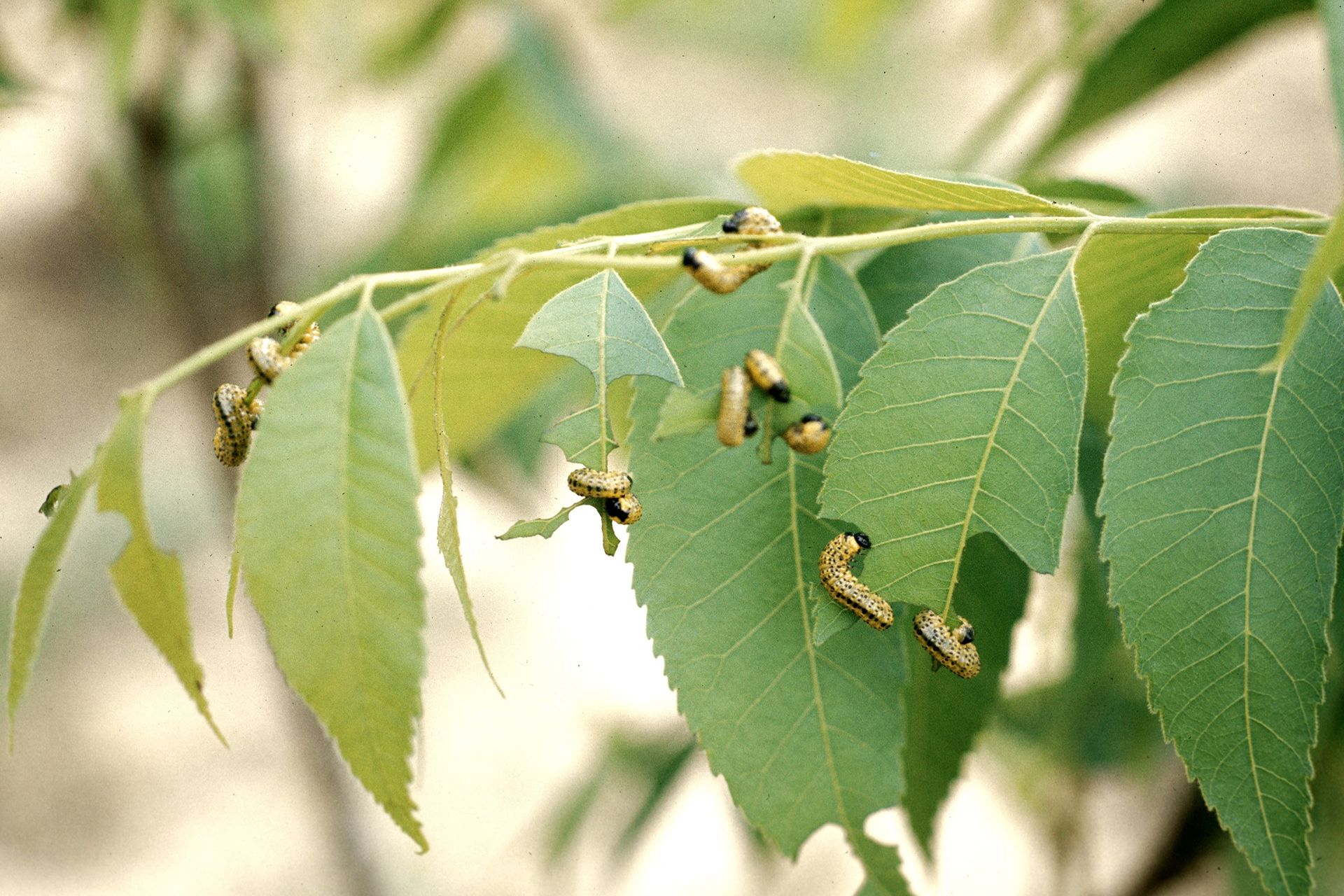
Larvae feed on leaves of dogwood (Cornus spp.), including grey dogwood (Cornus racemosa), silky dogwood (Cornus amomum), and flowering dogwood (Cornus florida). Early instars skeletonize leaves in groups; later instars consume entire leaves except the midvein.
Host Associations
- Cornus racemosa - primary grey dogwood
- Cornus amomum - silky dogwood
- Cornus florida - flowering dogwood
Life Cycle
Females deposit in clutches of 100 or more on undersides of dogwood leaves. Eggs hatch and larvae develop through summer, passing through multiple instars with dramatic appearance changes. With approach of autumn, mature larvae leave trees and bore into rotting wood or structural wood (including decks and siding) to construct chambers. Winter is spent as larvae in these chambers. occurs in spring, with emerging from May through July.
Behavior
Larvae initially feed gregariously, skeletonizing leaves in groups. As they grow, they become more solitary and consume entire leaves. Mature larvae exhibit wandering in autumn to locate suitable wood for chamber construction. When disturbed, larvae may assume a characteristic curled or snaky posture. The white waxy coating of intermediate instars is thought to provide protection against and , possibly by mimicking bird droppings or creating a physical barrier.
Ecological Role
Herbivore and defoliator of dogwood . Serves as prey for various and . The unusual wood-boring creates small galleries that may contribute to wood decomposition processes.
Human Relevance
Occasional pest of ornamental dogwoods in landscapes and gardens. Mature larvae may damage wooden structures (decks, siding) when constructing chambers, producing small pock marks and sawdust piles. Not a significant economic pest but may cause aesthetic damage to plants.
Similar Taxa
- Eriocampa juglandisbutternut woollyworm, another waxy-coated larva; distinguished by association with walnut and hickory (Juglans, Carya) rather than dogwood, and by pupal in soil rather than larval overwintering in wood
- caterpillars (Lepidoptera larvae)similar larval form but distinguished by having five or fewer pairs of versus six or more in
Sources and further reading
- BugGuide
- iNaturalist taxon
- NCBI Taxonomy
- Archive — Bug of the Week
- From the Bug of the Week Mailbag: Who’s been munching on my deck? Dogwood sawfly, Macremphytus tarsatus — Bug of the Week
- What lies beneath the wax? A duo of leaf-eating sawflies: Dogwood sawfly, Macremphytus tarsatus, and Butternut woollyworm, Eriocampa juglandis — Bug of the Week