
Triscolia
Saussure & Sichel, 1864
Species Guides
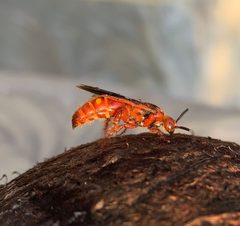
1- Triscolia ardens(Fire-tailed Scoliid Wasp)
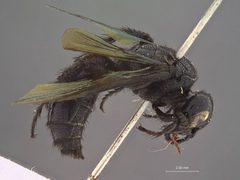
Triscolia is a of scoliid wasps in the Scoliidae, containing approximately 560 worldwide. The genus includes Triscolia ardens, the only member of its genus found in North America north of Mexico. These are of scarab beetle , with females actively seeking and stinging subterranean to serve as food for their larvae.

Pronunciation
How to pronounce Triscolia: /trɪsˈkəʊliə/
These audio files are automatically generated. While they are not always 100% accurate, they are a good starting point.
Images
Distribution
Triscolia ardens, the only North American north of Mexico, occurs from Texas to southern California and is relatively common in the southwestern United States and northern Mexico. The as a whole has a broader distribution with tropical species reaching larger body sizes.
Life Cycle
Females fly low over the ground to detect subterranean scarab beetle . Upon locating a , the female digs up the grub using her densely spiny legs, stings it into paralysis, and lays a single on the immobilized host. Some move the grub deeper into the soil and construct an earthen around it before depositing the egg and sealing the tunnel. The larva feeds externally on the paralyzed host for one to two weeks before spinning a silken cocoon and pupating. Most North American scoliids overwinter in the pupal stage. The size of the mature wasp correlates with host size, with larger hosts producing larger wasps.
Behavior
Females actively hunt for scarab beetle by flying low over the ground and detecting below the surface. Both sexes visit flowers, particularly milkweed (Asclepias), seep willow (Baccharis), saltcedar (Tamarix), desert willow (Chilopsis), mesquite (Prosopis), scalebroom (Lepidospartum), and buckwheat (Eriogonum). At day's end, bed down singly on vegetation, remaining alert but relatively inactive as temperatures fall. Males possess long and a three-pronged 'pseudosting' at the tip, though this structure is not functional for stinging.
Ecological Role
Scoliid wasps serve as agents of scarab beetles, which include numerous agricultural and horticultural pests. The relationship helps regulate scarab naturally. may contribute to pollination through their flower-visiting .
Human Relevance
Scoliid wasps are beneficial insects that help control pest scarab beetles, including that damage crops and turf. Some tropical scoliid species have been intentionally introduced to the United States to control scarab pests, though establishment has been inconsistent. The are not aggressive toward humans and their sting is used only for immobilization.