
Polochrum
Spinola, 1805
Species Guides
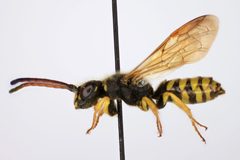
1Polochrum is a of solitary in the Sapygidae, historically placed in Masaridae. These wasps are known for their association with nests, where they act as . The genus contains multiple distributed primarily in the Palearctic region. They exhibit the slender body form and reduced wing venation characteristic of sapygid wasps.
Pronunciation
How to pronounce Polochrum: //pɵˈloʊkrəm//
These audio files are automatically generated. While they are not always 100% accurate, they are a good starting point.
Identification
Polochrum can be distinguished from other sapygid by their elongated, slender body form with a strongly constricted petiole ( waist). The forewings show reduced venation with a closed marginal , a trait shared with related genera but with specific configurations that separate Polochrum. The is relatively large with prominent . Species-level identification requires examination of subtle differences in facial markings, clypeal shape, and male genitalia structure.
Images
Habitat
Found in diverse terrestrial including grasslands, open woodlands, and Mediterranean scrub. Associated with areas supporting of bees, particularly of Anthophora and related anthophorine bees that nest in soil or soft rock substrates.
Distribution
Palearctic distribution, with records from Europe, North Africa, and extending eastward through Central Asia. European records concentrate in the Mediterranean basin and southern temperate regions.
Seasonality
activity period coincides with the season of bees, generally from late spring through summer (May–August in temperate regions).
Host Associations
- Anthophora - Larvae develop on food stores intended for offspring
Life Cycle
Females locate nests of solitary bees, particularly Anthophora , and deposit into the . The developing larva consumes the pollen and nectar provision intended for the host larva, eventually killing it. Development completes within the sealed brood cell, with emerging the following season.
Behavior
Females exhibit nest-searching , investigating burrows of ground-nesting bees. have been observed visiting flowers for nectar. Males establish territories near nesting of bees, where they intercept and mate with receptive females.
Ecological Role
Acts as a ( ) of solitary bees, regulating . contribute to pollination through incidental pollen transfer during nectar feeding.
Human Relevance
No direct economic importance. Occasionally encountered by beekeepers and naturalists in areas with high densities of nests. Not known to sting humans.
Similar Taxa
More Details
Taxonomic history
Polochrum has been variously classified in Masaridae (pollen wasps) and Sapygidae due to similarities in . Current molecular and morphological evidence supports placement in Sapygidae. The name has occasionally been misspelled as 'Polochrus' in older literature.