
Aporinellus completus
Banks, 1917
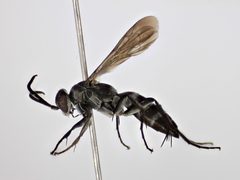
A of spider wasp in the Pompilidae. Described by Nathan Banks in 1917. The Aporinellus comprises small to medium-sized spider wasps that are of spiders. The specific epithet 'completus' refers to complete or fully developed features, though the original description context is not preserved in standard databases.
Pronunciation
How to pronounce Aporinellus completus: //ˌæpɔːrɪˈnɛləs kəmˈpliːtəs//
These audio files are automatically generated. While they are not always 100% accurate, they are a good starting point.
Identification
Members of Aporinellus are small spider wasps, generally 5-12 mm in length, with slender bodies and relatively short . -level identification within the requires examination of male genitalia and wing venation patterns. A. completus can be distinguished from by subtle differences in clypeal structure and propodeal , though these characters require knowledge and reference to the original type material.
Images
Distribution
Known from the western United States based on type locality and limited collection records. The precise range is poorly documented due to infrequent collection and identification challenges.
Life Cycle
As with other Pompilidae, the involves a relationship with spiders. Females hunt spiders, sting them to induce paralysis, and deposit an on the immobilized . The larva consumes the spider while it remains alive, eventually pupating within the spider's burrow or a constructed .
Ecological Role
Functions as a of spiders, contributing to of spider . The specific spider for A. completus have not been documented.
Similar Taxa
- Aporinellus taeniatusSimilar size range and western North American distribution; distinguished by differences in wing banding patterns and male genitalia structure
- Other small Pompilidae genera (e.g., Arachnospila, Ageniella)Overlap in general and size; Aporinellus have distinctive clypeal shape with a or projection not found in these related
More Details
Taxonomic History
Described by Nathan Banks in 1917 from material collected in the western United States. The has received limited taxonomic attention since its original description, and no modern redescriptions or revisions are available in the primary literature.
Collection Rarity
Only 9 observations recorded in iNaturalist as of the knowledge cutoff, indicating either genuine rarity, cryptic habits, or undercollection due to identification difficulties. The is not represented in major digitized museum collections accessible through GBIF in significant numbers.