
Epipompilus aztecus
(Cresson, 1869)
Epipompilus aztecus is a Neotropical spider wasp in the Ctenocerinae. It is naturally rare with low capture frequency despite extensive sampling effort. The has been recorded using and Möerick traps (yellow and red). Its known distribution has expanded considerably in recent years through new records in South America and the United States.
Pronunciation
How to pronounce Epipompilus aztecus: /ˌɛpɪˈpɒmpɪləs ˈæztɪkəs/
These audio files are automatically generated. While they are not always 100% accurate, they are a good starting point.
Identification
No specific identification guidance available in sources. As a member of Ctenocerinae, it belongs to a characterized by certain morphological traits, but -level diagnostic features are not documented in the provided sources.
Images
Appearance
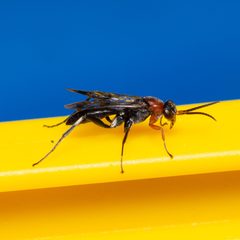
Black and reddish brown in color.
Habitat
Tropical deciduous forests. Also recorded in Cerradão (Brazilian savanna forest type) with flooded field areas in the Pantanal at 125 m elevation, and Edwards plateau in Texas. The occurs across a range of elevations from 21 m to approximately 1,000 m above sea level.
Distribution
Mexico, Central America, and South America. First South American record in 2010 from Serra da Bodoquena National Park (Mato Grosso do Sul, Atlantic forest/Cerrado ). Subsequently recorded in São Paulo (Cerrado), Pará (Amazon), and the Brazilian Pantanal (Mato Grosso). Range extended to Texas, USA in 2018. GBIF records from Brazil: Mato Grosso do Sul, Mato Grosso, Pará, and São Paulo states.
Seasonality
Two female specimens collected in November 2015 in the Brazilian Pantanal. No broader seasonal patterns documented.
Behavior
Naturally rare with low capture frequency despite extensive trapping effort. Can be sampled using and Möerick traps.
More Details
Taxonomic notes
The Epipompilus occurs throughout the Neotropical region, United States, Australia and New Zealand. South American members of this genus appear to have evolved separately from other Pompilidae for a considerable time.
Sources and further reading
- BugGuide
- Wikipedia
- GBIF taxonomy match
- iNaturalist taxon
- Catalogue of Life
- Bug Eric: Desert Grasshoppers
- The mini grasshoppers that outlived dinosaurs: the fascinating world of Tetrigidae | Blog
- Bug Eric: April 2009
- Insecta, Hymenoptera, Vespoidea, Pompilidae, Epipompilus aztecus (Cresson, 1869): first record in South America
- New distribution record of Epipompilus aztecus (Cresson, 1869) (Hymenoptera: Pompilidae) in the Brazilian Pantanal
- Distribution of Epipompilus aztecus (Cresson, 1869) (Hymenoptera, Pompilidae) with a new record from Texas, United States
- Additions to the Known Distribution ofEpipompilus aztecus(Cresson, 1869) andE. excelsus(Bradley, 1944) (Hymenoptera: Pompilidae)