
Ageniella faceta
(Cresson, 1872)
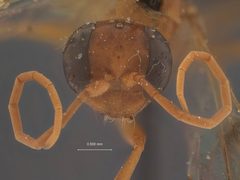
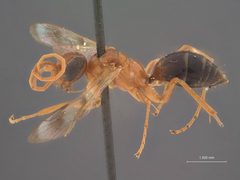
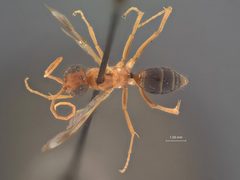
Ageniella faceta is a of spider wasp in the Pompilidae, first described by Cresson in 1872. It belongs to the 'accepta species group' within the Ageniella, which includes morphologically similar species that are difficult to distinguish without expert examination. The species has been historically confused with A. accepta and A. conflicta due to overlapping characteristics and limited diagnostic resources.
Pronunciation
How to pronounce Ageniella faceta: /ˌædʒəˈniːələ fəˈsiːtə/
These audio files are automatically generated. While they are not always 100% accurate, they are a good starting point.
Identification
-level identification within the Ageniella accepta group requires expert examination and cannot reliably be made from images of live specimens. Females of related species in this group are small (forewing length 5–8 mm), with orange and brown coloration and dark-banded wings that create an -mimicking appearance. Males are distinctly different: black with reddish leg markings and a white spot at the abdominal tip, with forewing length 4–5 mm.
Images
Similar Taxa
- Ageniella acceptaFemales are morphologically similar with orange-brown coloration and banded wings; historically difficult to distinguish from A. faceta without expert identification.
- Ageniella conflictaFemales share the -mimicking appearance with banded wings and similar size; the two have been repeatedly confused in field observations and historical records.
- Ageniella blaisdelliThe third member of the accepta group, restricted to western North America, with similar overall and identification challenges.
More Details
Taxonomic status
Ageniella faceta has been treated as both a valid and a synonym in different taxonomic treatments. Catalogue of Life lists it as a synonym, while GBIF and NCBI currently recognize it as an accepted species. This taxonomic instability reflects ongoing challenges in resolving species boundaries within the Ageniella accepta group.
Data scarcity
No observations of Ageniella faceta are recorded in iNaturalist, and no Wikipedia summary exists for this . Published biological information specific to A. faceta appears to be extremely limited in the accessible literature, with most available information pertaining to the broader accepta species group or the better-documented A. accepta and A. conflicta.