
Ageniella arcuata
(Banks, 1910)
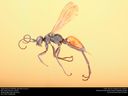
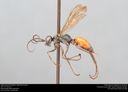
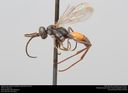
Ageniella arcuata is a small spider wasp in the Pompilidae, described by Banks in 1910. It belongs to the "accepta group" of Ageniella, a complex of morphologically similar species that includes A. conflicta and A. blaisdelli. Like other members of this , it is likely a solitary hunter that provisions nests with paralyzed spiders for its larval offspring. The species is poorly documented in the scientific literature, with most biological details remaining unstudied.
Pronunciation
How to pronounce Ageniella arcuata: //ˌædʒəˈnɪɛlə ɑːrˈkjuːeɪtə//
These audio files are automatically generated. While they are not always 100% accurate, they are a good starting point.
Images
Distribution
The distribution of Ageniella arcuata is not well documented. Based on the range patterns of related in the accepta group, it may occur in the southern and western United States, though this remains speculative.
Ecological Role
As a member of Pompilidae, Ageniella arcuata likely functions as a of spiders and may contribute to local spider . The Ageniella as a whole appears to target wolf spiders (Lycosidae) and potentially other spider as prey for larval development.
Similar Taxa
- Ageniella conflictaExtremely similar ; females of A. conflicta and A. arcuata cannot be reliably distinguished from images alone. Both are small orange-brown pompilids with banded wings in the accepta group. Expert identification requires examination of specimens.
- Ageniella acceptaMember of the same group with nearly identical female coloration and wing banding. Historical confusion between these has resulted in poorly resolved biological records.
- Ageniella blaisdelliThird member of the accepta group, also western in distribution, and similarly difficult to distinguish from A. arcuata without detailed morphological analysis.