
Ceropalinae
cuckoo spider wasps
Genus Guides
1- Ceropales(cuckoo spider wasp)
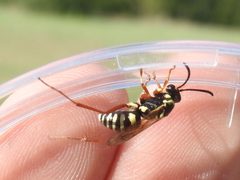
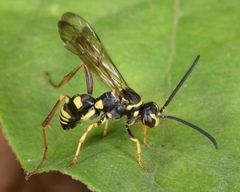
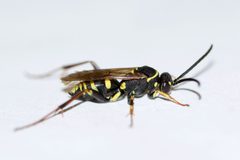
Ceropalinae is a of spider wasps (Pompilidae) comprising two : Ceropales and Irenangelus. Members are obligate kleptoparasites that exploit the nests of other solitary , primarily fellow pompilids that hunt spiders. Unlike most spider wasps that provision their own nests with paralyzed spiders, ceropalines invade the nests of wasps to lay their on spiders already captured and stored by the host. This parasitic lifestyle represents a distinct evolutionary strategy within the Pompilidae.
Pronunciation
How to pronounce Ceropalinae: /ˌsɛroʊˈpælaɪniː/
These audio files are automatically generated. While they are not always 100% accurate, they are a good starting point.
Identification
Ceropalinae can be distinguished from other Pompilidae by their kleptoparasitic and associated morphological adaptations. The subfamily contains only two : Ceropales (widespread in the Holarctic region) and Irenangelus (aberrant genus with in the Indian subcontinent and elsewhere). Field identification to subfamily level is difficult without observing parasitic behavior or examining detailed morphological characters. The subfamily Pepsinae, which includes many similar-looking species, can be separated by the serrated outer edge of the hind tibia in many pepsines (smooth in Ceropalinae). The subfamily Pompilinae contains species that dig their own burrows rather than invading those of other .
Images
Distribution
The has a broad distribution corresponding to that of their . Ceropales occurs in the Holarctic region (North America, Europe, Asia). Irenangelus has been recorded from the Indian subcontinent, with at least one described from Rajasthan, India, and other species known from various localities. The exact distribution of Irenangelus remains poorly documented due to the scarcity of specimens and observations.
Host Associations
- Pompilidae - kleptoparasiteCeropalinae are obligate kleptoparasites primarily on other spider wasps ( Pompilidae) that hunt spiders and provision their own nests
Behavior
Ceropalinae are kleptoparasitic that invade the nests of other solitary wasps to exploit their prey-capture efforts. The female wasp enters a nest and lays an on a spider that has been paralyzed and stored by the host wasp. The ceropaline larva then consumes the spider, effectively stealing the food resource that the host female had gathered for her own offspring. This parasitic strategy eliminates the need for ceropalines to hunt spiders themselves or construct and provision their own nests.
Ecological Role
As kleptoparasites, Ceropalinae function as secondary consumers that redirect energy and resources within spider wasp . By parasitizing other pompilid wasps, they impose a cost on and may influence host nesting , , or . Their presence indicates established populations of host spider wasps with sufficient nest to support parasitic exploitation.
Human Relevance
Ceropalinae have minimal direct interaction with humans. They are not known to sting humans aggressively, nor are they considered beneficial or pest in agricultural or urban contexts. Their primary significance is scientific, as they represent a specialized parasitic strategy within the spider wasps and contribute to understanding the evolutionary of kleptoparasitism in Hymenoptera.
Similar Taxa
- PepsinaeSimilar body form and coloration in many ; distinguished by behavioral differences (Pepsinae are primary hunters, not kleptoparasites) and morphological characters such as serrated hind tibiae in many pepsines versus smooth in Ceropalinae
- PompilinaeSimilar overall appearance as spider wasps; distinguished by nesting (Pompilinae dig their own burrows and provision them personally, rather than invading nests of other )
More Details
Taxonomic composition
The contains only two : Ceropales Latreille, 1796 and Irenangelus Schulz, 1906. This restricted generic diversity contrasts with the much larger subfamilies Pepsinae and Pompilinae.
Irenangelus research status
The Irenangelus remains poorly known, with taxonomic revisions continuing to reveal new . A 2020 revision from the Indian subcontinent described I. acuminatus from Rajasthan and provided the first comprehensive treatment of the genus for that region.
Sources and further reading
- BugGuide
- Wikipedia
- iNaturalist taxon
- NCBI Taxonomy
- Bug Eric: Wasp Wednesday: Anoplius
- Bug Eric: Wasp Wednesday: Caliadurgus hyalinatus
- Bug Eric: Priocnemis minorata
- Bug Eric: Wasp Wednesday: Ageniella accepta/conflicta
- Bug Eric: Spider wasp, Dipogon calipterus
- Review of the aberrant spider wasp genus Irenangelus Schulz (Pompilidae: Ceropalinae) from the Indian subcontinent with the description of a new species