Pseudomethocini
Genus Guides
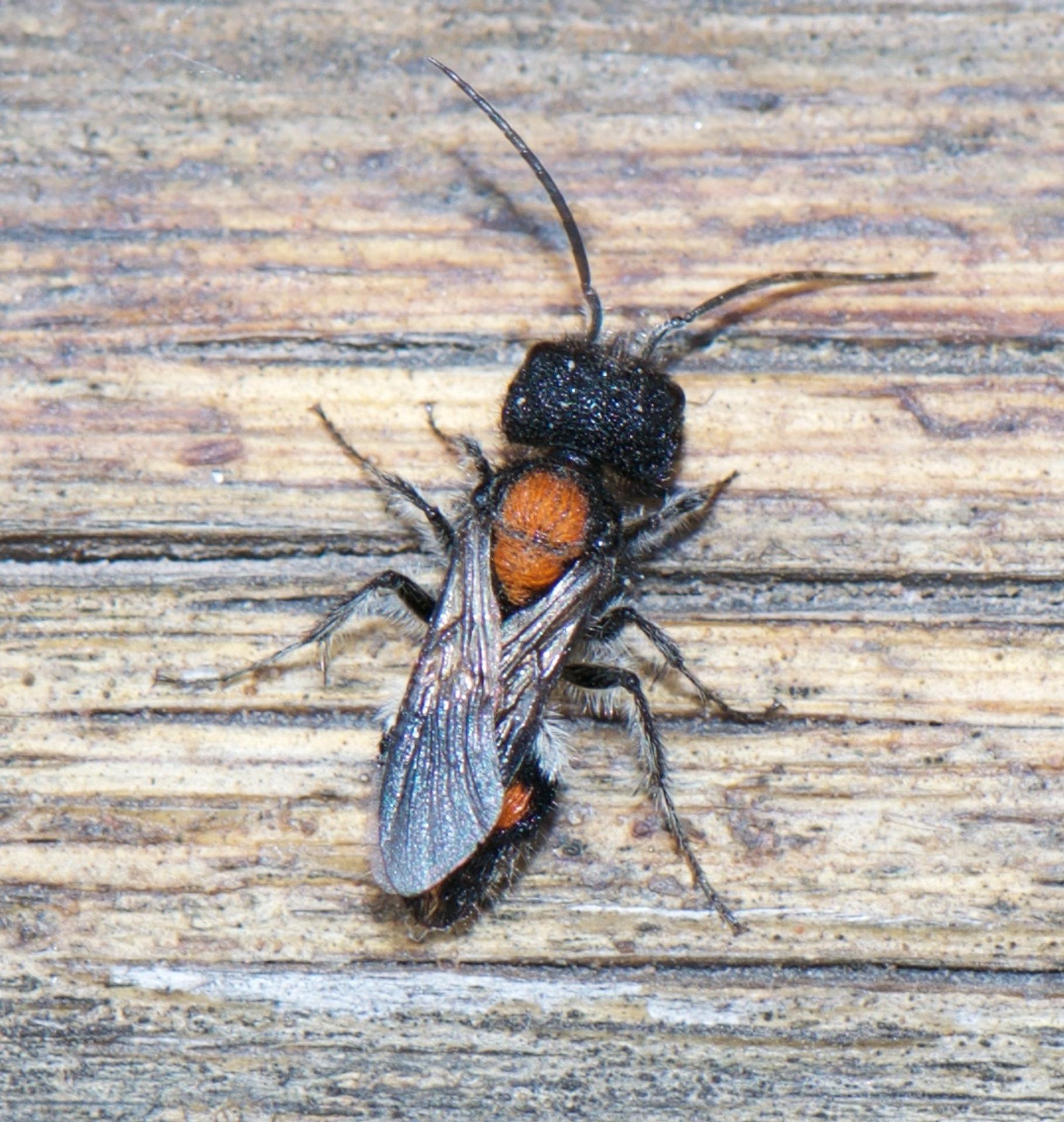
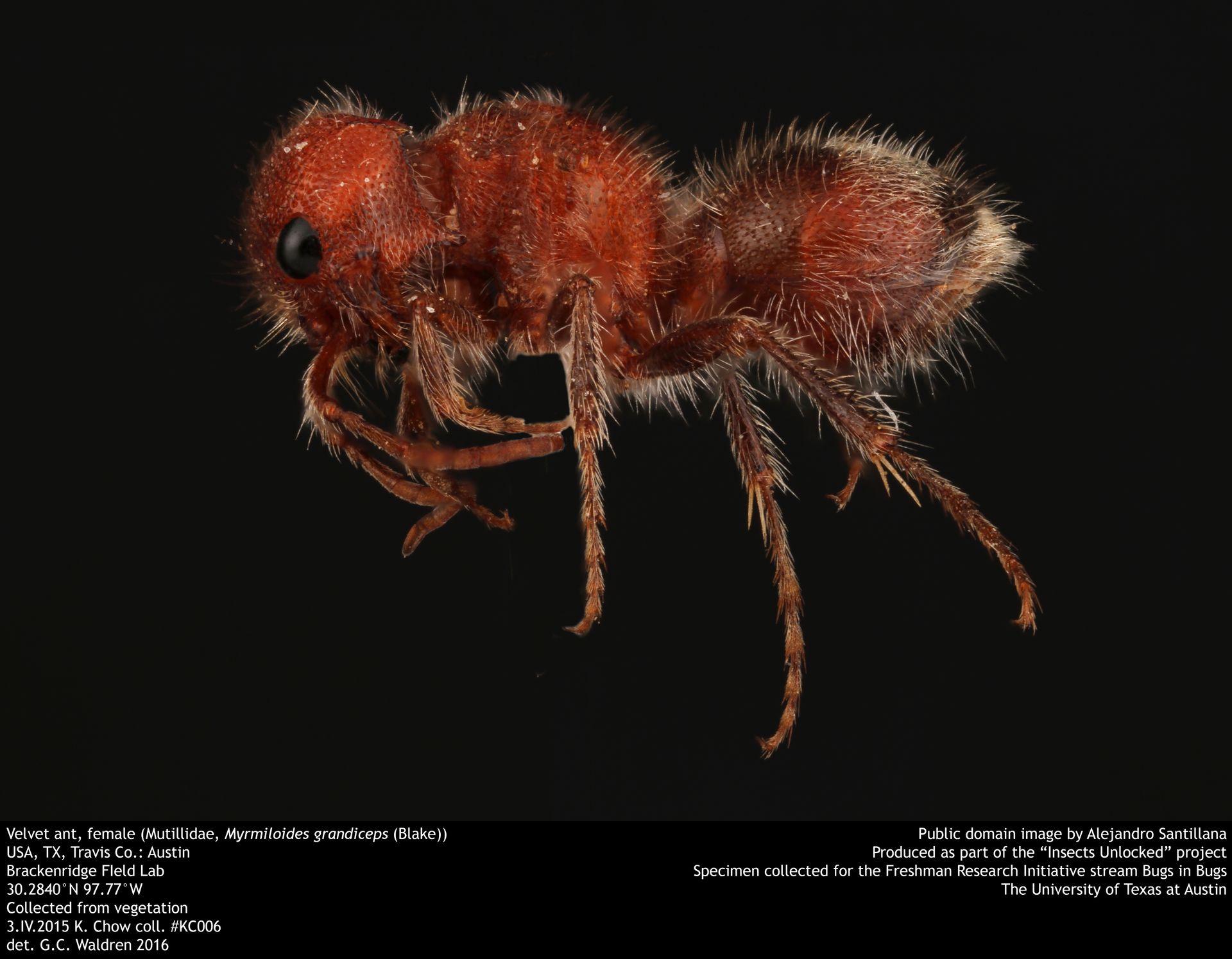
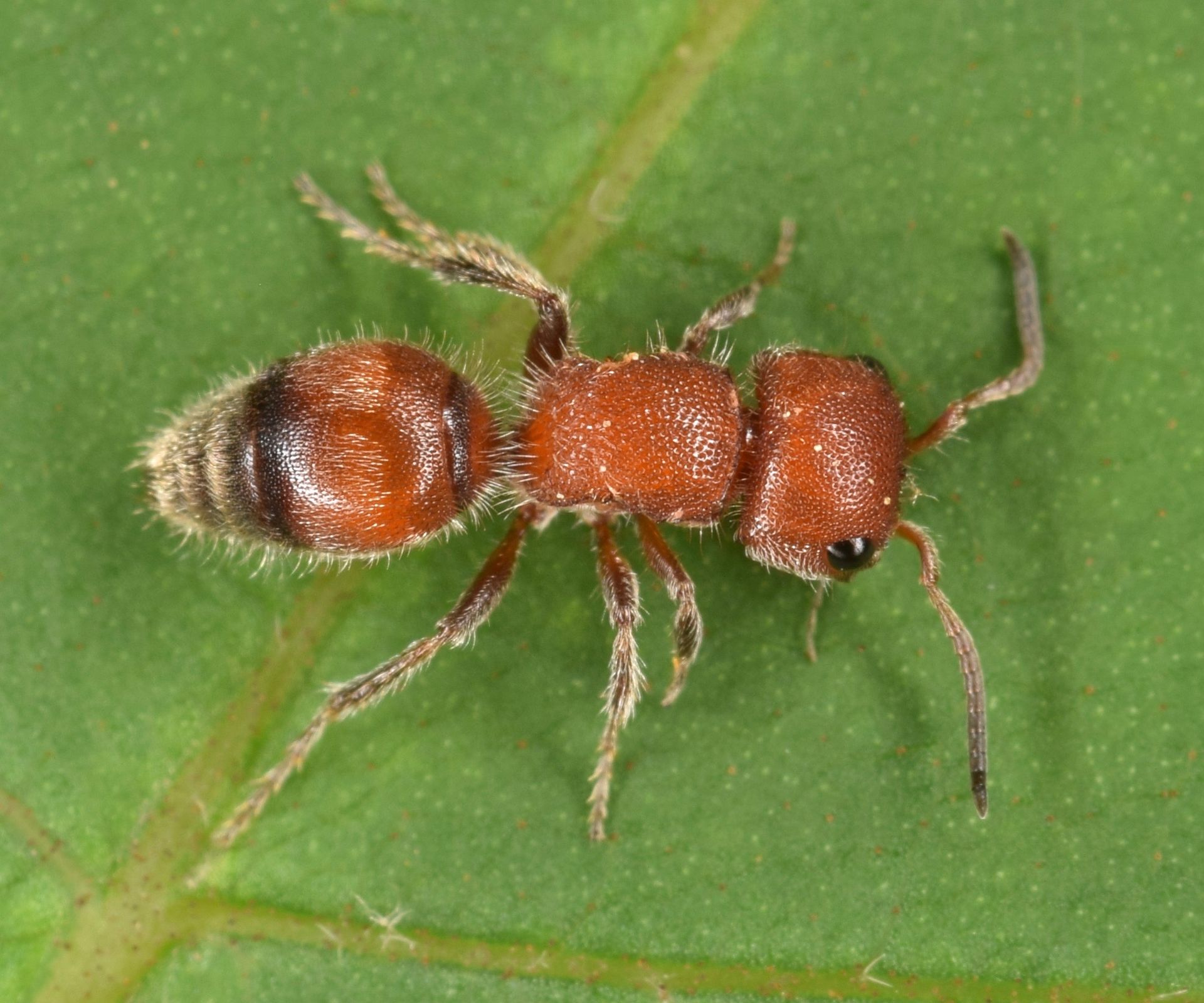
2Pseudomethocini is a tribe of velvet ants (Mutillidae) within the Mutillinae. Members are flightless female with dense, brightly colored and males that possess wings. The tribe contains multiple distributed primarily in the New World. These solitary are known for their aposematic coloration and painful defensive stings.
Pronunciation
How to pronounce Pseudomethocini: //ˌsjuːdoʊˌmɛθəˈsaɪniː//
These audio files are automatically generated. While they are not always 100% accurate, they are a good starting point.
Identification
Females distinguished from actual ants (Formicidae) by the absence of a petiole node and presence of a straight, flexible waist; from other Mutillidae tribes by subtle differences in structure and setal patterns. Males identified by wing venation and genitalia characteristics. is extreme—males and females of the same were historically described as different species.
Images
Appearance
Females are wingless with robust, -like bodies covered in dense, velvety setae forming striking patterns of red, orange, black, or white. Males possess two pairs of wings and more slender bodies with less conspicuous hair. Both sexes have a flexible, non-constricted waist and lack the node-like petiole seen in ants. The is often heavily sculptured with pits or ridges.
Habitat
Arid and semi-arid regions including deserts, scrublands, and dry grasslands. Often found in sandy or loose soils suitable for burrowing. Elevation ranges from sea level to montane zones depending on .
Distribution
Primarily Neotropical and Nearctic regions, with highest diversity in southwestern North America, Mexico, and South America. Some extend into the Caribbean.
Seasonality
Most active during warm months; peak activity varies by latitude and elevation. frequently encountered after summer rains in desert regions.
Life Cycle
Females deposit in nests (solitary bees or ). Larvae are ectoparasitoids, consuming the host larva and pupating within the host . Developmental timing synchronized with host .
Behavior
Females actively search for nests by digging and investigating burrow entrances. Both sexes produce stridulatory sounds by rubbing specialized body regions. Defensive includes curling into a ball and delivering a powerful sting when disturbed.
Ecological Role
of solitary bees and , potentially regulating . Aposematic coloration serves as warning to ; may participate in Müllerian mimicry complexes with other stinging insects.
Human Relevance
Females deliver intensely painful stings, earning the group the nickname 'cow killers' in some regions. Stings are medically significant but not life-threatening to humans without allergy. Occasionally encountered by hikers and field in arid regions.
Similar Taxa
- SphaeropthalminiAnother Mutillinae tribe with wingless females; distinguished by differences in and male genitalia structure
- Dasymutilla in tribe Sphaeropthalmini with convergent aposematic coloration; separated by thoracic structure and setal pattern details
More Details
Sexual dimorphism
Historical was complicated by extreme dimorphism; many were described twice under different names for males and females before their conspecificity was recognized