
Metaclisis
Förster, 1856
Species Guides
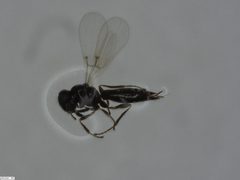
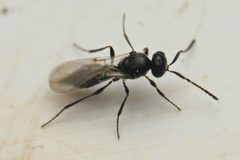
1Metaclisis is a of minute in the Platygastridae, established by Förster in 1856. The genus contains at least 30 described worldwide, with 18 species recognized in the Nearctic region alone, 16 of which were described as new to science in a 1981 revision. These wasps are part of the superfamily Platygastroidea, a group characterized by reduced wing venation and parasitoid lifestyles. Species have been documented from North America and parts of Europe.
Pronunciation
How to pronounce Metaclisis: /mɛtəˈklɪsɪs/
These audio files are automatically generated. While they are not always 100% accurate, they are a good starting point.
Identification
Metaclisis can be distinguished from other platygastrid by characters detailed in the generic provided by Kozlov (1981), which includes examination of antennal structure, facial , and wing venation patterns. Identification to species level requires examination of both sexes; males and females exhibit distinct morphological differences. Nearctic species can be identified using the dichotomous keys provided in the 1981 revision, which separate females and males based on antennal segment proportions, mesoscutal sculpture, and metasomal shape.
Images
Distribution
Nearctic region: Canada (Québec, Ontario, Manitoba, Labrador, eastern provinces) and United States (Arizona, New Mexico, Texas, California, Illinois, Maryland, North and South Carolina, Tennessee). Palearctic records include Denmark, Norway, and Sweden. The has a broader global distribution beyond these documented regions given the presence of at least 30 described .
Similar Taxa
- Other Platygastridae generaMetaclisis shares the reduced wing venation and small body size typical of Platygastridae, but is distinguished by antennal and facial characters detailed in the generic .
More Details
Taxonomic history
The was revised for the Nearctic fauna by Kozlov in 1981 (The Canadian Entomologist 113: 1069-1085), who described 16 new and provided the first comprehensive keys for the region.
Collection bias
Only 12 observations are recorded in iNaturalist as of data retrieval, suggesting these minute are undercollected or underidentified in citizen science platforms.