
Pamphilius phyllisae
Middlekauff
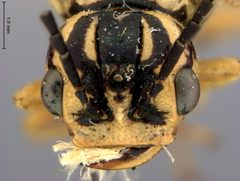
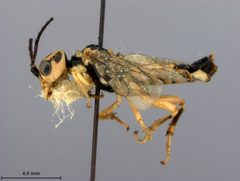
Pamphilius phyllisae is a web-spinning in the Pamphiliidae, first described by Middlekauff. The is a herbivore confined to northern red oak (Quercus rubra). A notable occurred in 1964 at Linn Run State Park, Pennsylvania, where exceeded one million ultimate instar larvae per acre. The spans 1, 2, or more years, with approximately six weeks spent on the tree.
Pronunciation
How to pronounce Pamphilius phyllisae: /pæmˈfɪliəs ˈfɪlɪsiː/
These audio files are automatically generated. While they are not always 100% accurate, they are a good starting point.
Identification
Distinguished from other Pamphilius by association with northern red oak and specific larval ; identification requires examination of stages or specimens by a .
Images
Habitat
Northern red oak (Quercus rubra) forests; larvae occur on trees.
Distribution
Eastern North America: documented from Pennsylvania, USA (type locality); distribution records from Canada (New Brunswick, Ontario, Quebec).
Diet
Feeds on northern red oak (Quercus rubra); specificity confirmed.
Host Associations
- Quercus rubra - obligate confined to northern red oak; all life stages dependent on this
Life Cycle
Duration of 1, 2, or more years; approximately six weeks spent on tree. Specific timing of developmental stages not detailed.
Behavior
Larvae exhibit of ; during the 1964 , nearly complete encapsulation was observed. Larvae construct silk webs on foliage, typical of Pamphiliidae.
Ecological Role
Herbivore on northern red oak; can cause localized defoliation. suggests defense against natural enemies.
Human Relevance
Potential forest pest during conditions; 1964 Pennsylvania outbreak caused significant localized defoliation of northern red oak. No other economic impacts documented.
Similar Taxa
- Other Pamphilius speciesShare web-spinning larval habit and general ; distinguished by specificity (northern red oak) and detailed larval morphology
More Details
Outbreak history
The 1964 at Linn Run State Park, Pennsylvania, was the first recorded occurrence of this and remains unusual in its magnitude. The outbreak coincided with abnormally low precipitation and high rates, though causal relationships remain unclear.