
Orussus minutus
Middlekauff, 1983
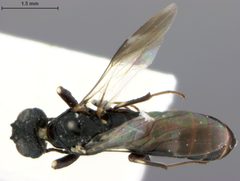
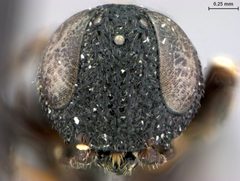
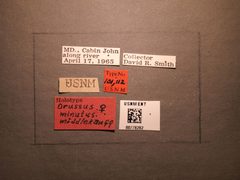
Orussus minutus is a rarely collected parasitic woodwasp in the Orussidae, native to the eastern United States. The is notable for its significant western range expansion documented through citizen science platforms and museum collections. Previously known from only about 50 specimens mainly in the Northeast, new records from Arkansas, Iowa, Minnesota, and Manitoba extend its range hundreds of miles westward. The species is extremely uncommon in collections despite intensive trapping efforts.
Pronunciation
How to pronounce Orussus minutus: /oˈɹʌs.əs mɪˈnjuː.təs/
These audio files are automatically generated. While they are not always 100% accurate, they are a good starting point.
Identification
Orussus minutus can be distinguished from other Orussidae by its small size and specific morphological features, though detailed diagnostic characters are not well-documented in accessible literature. The Orussidae is characterized by that arise low on the and a lifestyle unique among woodwasps. Identification to level typically requires examination by a .
Images
Habitat
Mature second-growth eastern mixed deciduous forest dominated by oak (Quercus) and hickory (Carya), approximately 80-100 years old. Specimens have been collected in forested areas using SLAM traps, black multifunnel traps, and aerial netting.
Distribution
Eastern United States with significant western range expansion. Previously recorded from New York south to Georgia and west to Illinois. New state and province records from Arkansas (Ozark Mountains), Iowa, Minnesota, Manitoba (Canada), West Virginia, Michigan, Connecticut, and Virginia. The western expansion represents a range increase of hundreds of miles.
Seasonality
have been collected in spring, primarily March through May, with peak activity in April-May.
Host Associations
- Buprestidae - stages of jewel beetles
- Cerambycidae - stages of longhorned beetles
- Siricidae - stages of woodwasps
- Xiphydriidae - stages of woodwasps
Behavior
Extremely rarely collected despite intensive Malaise trapping efforts; one collector obtained only 33 specimens in 35 years with approximately 15 traps annually. This rarity in collections suggests either genuinely low densities, highly specific requirements, or cryptic that avoids standard sampling methods.
Ecological Role
Human Relevance
Has been documented through citizen science platforms including Flickr and BugGuide, demonstrating the value of public photographic records for detecting range expansions in rarely collected insects. Not an economic pest or beneficial in agriculture or forestry.
Similar Taxa
- Orussus abietinusAnother small Nearctic Orussus ; O. minutus is smaller and has different geographic distribution and associations
- Other Siricidae and woodwaspsNon-parasitic woodwasps lack the of Orussidae and have different ecological roles; Orussus is distinguished by its unique parasitoid lifestyle among woodwasps