
Protosmia
Ducke, 1900
Species Guides
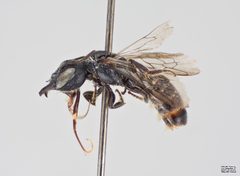
1- Protosmia rubifloris(Prong-faced Slender-Mason)
Protosmia is a of solitary bees in the Megachilidae, tribe Osmiini, containing over 30 described . The genus includes several subgenera, notably Chelostomopsis and Nanosmia. Species within the subgenus Chelostomopsis are broad pollen that nest in preexisting cavities in dead wood or pine cones, using pure resin to construct nest partitions. The genus has a primarily Palaearctic distribution with some species extending into the Nearctic region.
Pronunciation
How to pronounce Protosmia: //pɹəʊˈtɒsmiə//
These audio files are automatically generated. While they are not always 100% accurate, they are a good starting point.
Identification
Identification to level requires examination of morphological characters, particularly mandibular structure and male genitalia. Keys are available for Palaearctic species of subgenus Chelostomopsis. The subgenus Nanosmia contains small-bodied species with distinctive male genitalic structures including and trifid processes in some species.
Images
Habitat
Preexisting linear cavities in dead wood or pine cones serve as nesting sites for at least some (subgenus Chelostomopsis).
Distribution
Primarily Palaearctic; includes from Spain, Morocco, Tunisia, Turkey, Tadjikistan, the Arabian Peninsula, and the Levant. One Nearctic species is known in subgenus Chelostomopsis.
Diet
Broad pollen (polylectic) exploiting flowers of numerous plant including Fabaceae, Asteraceae, Lamiaceae, Cistaceae, and Brassicaceae (documented for subgenus Chelostomopsis). Diet of other subgenera unknown.
Behavior
Nests in preexisting cavities; uses pure resin to construct partitions and nest plugs (subgenus Chelostomopsis).
Ecological Role
Likely serves as for multiple plant given polylectic pollen-foraging (subgenus Chelostomopsis).
Similar Taxa
- OsmiaBoth are osmiine megachilid bees; Protosmia distinguished by subgeneric characters and mandibular in Chelostomopsis.
- ChelostomaFormerly considered related or congeneric; Protosmia now treated as distinct with different nesting and floral associations.
More Details
Taxonomic complexity
The contains multiple subgenera (Chelostomopsis, Nanosmia, and others) with differing biological characteristics. Most detailed biological information available pertains only to subgenus Chelostomopsis; of other subgenera remains poorly known.
Recent taxonomic activity
Multiple new described in recent decades, including P. (Chelostomopsis) angustimandibulae from the Levant and three new species in subgenus Nanosmia from the Arabian Peninsula, Morocco, Tunisia, and Turkey.
Sources and further reading
- BugGuide
- Wikipedia
- GBIF taxonomy match
- iNaturalist taxon
- NCBI Taxonomy
- Catalogue of Life
- Palaearctic Protosmia bees of the subgenus Chelostomopsis (Megachilidae, Osmiini): biology, taxonomy and key to species
- A New Species of Protosmia Ducke From SpainWith Notes on Related Species(Hymenoptera: Megachilidae)
- New Palearctic bee species of <i>Protosmia</i> subgenus <i>Nanosmia</i> (Hymenoptera: Megachilidae)