
Hoplitis spoliata
(Provancher, 1888)
Dilated-horned Small-Mason
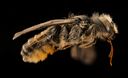
Hoplitis spoliata is a solitary in the Megachilidae, commonly known as the Dilated-horned Small-Mason. It is a member of the diverse osmiine bee tribe, which includes many species that nest in pre-existing cavities and use various materials to construct . The species was first described by Provancher in 1888 and is native to North America, with documented occurrences in the northeastern United States including Vermont.
Pronunciation
How to pronounce Hoplitis spoliata: //ˈhɒplɪtɪs spəʊˈlaɪətə//
These audio files are automatically generated. While they are not always 100% accurate, they are a good starting point.
Images
Distribution
North America; documented from Vermont, United States. GBIF records indicate presence in the northeastern United States.
More Details
Taxonomic Notes
Hoplitis spoliata belongs to the Osmiini tribe within Megachilidae. The Hoplitis contains numerous small to medium-sized , many of which are morphologically similar and require careful examination for identification. The specific epithet 'spoliata' and the 'Dilated-horned Small-Mason' suggest distinctive morphological features, though detailed descriptions are not readily available in the provided sources.
Data Availability
As of the available sources, iNaturalist reports 37 observations of this , indicating it is documented but not extensively studied. No Wikipedia summary exists for this species, suggesting limited public information availability.