
Megachile addenda
Cresson, 1878
cranberry leafcutter bee
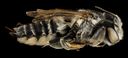
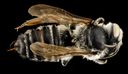
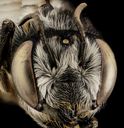
Megachile addenda is a solitary leafcutter bee native to North America, first described by Ezra Townsend Cresson in 1878. It is commonly known as the cranberry leafcutter bee due to its documented role as a of cranberry crops. The nests in sand beds and belongs to the subgenus Delomegachile. Like other Megachile species, females cut leaf pieces to construct chambers.
Pronunciation
How to pronounce Megachile addenda: /ˌmɛɡəˈkaɪli əˈdɛndə/
These audio files are automatically generated. While they are not always 100% accurate, they are a good starting point.
Images
Habitat
Nests in sand beds. Associated with cranberry areas.
Distribution
North America; recorded from Vermont, United States.
Behavior
Females cut leaves to construct nest chambers. Nesting occurs in sand beds.
Ecological Role
Documented of cranberries (Vaccinium macrocarpon).
Human Relevance
Managed or encouraged as a for cranberry agriculture.
More Details
Subgenus classification
Placed in subgenus Delomegachile.
Sources and further reading
- BugGuide
- Wikipedia
- GBIF taxonomy match
- iNaturalist taxon
- Catalogue of Life
- Looking for Cheap Urban Real Estate | Bug Squad
- In Search of the World's Biggest Bee: How It Came to 'Bee' | Bug Squad
- Photographer Allan Jones Exudes Patience, Skill and Talent | Bug Squad
- The Most Incredible Image of a Leafcutter Bee | Bug Squad
- The Native Bees in the UC Davis Bee Haven | Bug Squad
- Mailbox posts are fine homes for giant resin bees, Megachile sculpturalis — Bug of the Week
- Pollination, Foraging, and Nesting Ecology of the Leaf-Cutting Bee Megachile (Delomegachile) addenda (Hymenoptera: Megachilidae) on Cranberry Beds