
Coelioxys slossoni
Viereck, 1902
Sharp-tailed Bee, Cuckoo Leafcutting Bee
Species Guides
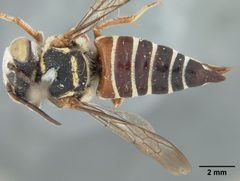
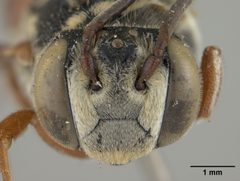
2Coelioxys slossoni is a of cuckoo bee in the Megachilidae, first described by Viereck in 1902. Like other members of the Coelioxys, this species is a kleptoparasite that targets leafcutting bees (Megachile spp.). Females deposit their into the provisioned nest of bees, where their larvae consume the host's pollen stores and eliminate the host offspring. The species occurs in North and Middle America and includes two recognized : C. s. slossoni and C. s. arenicola.
Pronunciation
How to pronounce Coelioxys slossoni: /siːliˈɒksɪs sləˈsoʊsaɪ/
These audio files are automatically generated. While they are not always 100% accurate, they are a good starting point.
Identification
Distinguished from other Coelioxys by subtle morphological characters including abdominal shape and punctation patterns. Separation from C. rufitarsis and C. octodentata requires examination of female abdominal tergites and male genitalia. The two (C. s. slossoni and C. s. arenicola) differ in geographic distribution and subtle structural features. Confusion with is common due to the slender, relatively hairless appearance; close inspection reveals branched body hairs characteristic of bees.
Images
Habitat
Associated with supporting of leafcutting bees (Megachile), which nest in pre-existing cavities including hollow stems, borings, and artificial blocks. Found in open, sunny areas with abundant flowering plants and suitable nesting substrates for hosts.
Distribution
Recorded from North America and Middle America. The nominate C. s. slossoni and C. s. arenicola have distinct but overlapping ranges; specific boundaries between subspecies are not well documented in available sources.
Seasonality
Activity period corresponds with that of Megachile , typically from late spring through summer. Males often emerge before females and may be observed patrolling areas with host nesting activity.
Host Associations
- Megachile - kleptoparasiteFemales lay in provisioned nest of leafcutting bees; larvae consume pollen/nectar stores and kill host offspring
Life Cycle
Development occurs within nest . Females locate sealed or nearly completed host cells, use their pointed to penetrate cell partitions, and deposit . Coelioxys larvae typically possess large used to destroy host eggs or larvae. occurs within the host cell; emerge the following season.
Behavior
Females exhibit nest-searching , investigating cavities and crevices for active nests. Males patrol nesting areas and visit flowers for nectar. Unlike non-parasitic bees, females do not collect pollen or construct nests.
Ecological Role
Acts as a regulator of leafcutting bees. As a kleptoparasite, it influences nesting success and local dynamics. contribute to pollination through incidental pollen transfer during flower visitation.
Human Relevance
Occasionally observed in gardens and agricultural settings where leafcutting bees are present, including areas with artificial blocks. May be perceived as a pest by those managing Megachile for pollination services, but represents natural ecological interaction.
Similar Taxa
- Coelioxys rufitarsisOverlapping range and similar associations; requires detailed examination of abdominal for separation
- Coelioxys octodentataSimilar size and general appearance; distinguished by number and arrangement of abdominal teeth in females
- NomadaAnother of cuckoo bees with similar and -like appearance; differs in associations (typically Andrena) and abdominal structure
More Details
Subspecies
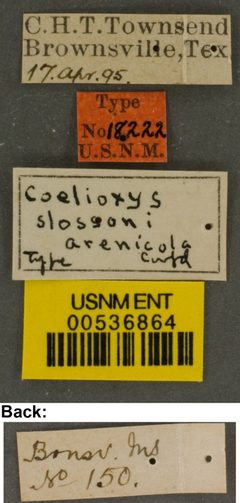
Two recognized: Coelioxys slossoni slossoni (nominate form) and Coelioxys slossoni arenicola. The latter subspecies name suggests association with sandy , though specific ecological differences are not documented in available sources.