Coelioxys mexicanus
Cresson, 1878
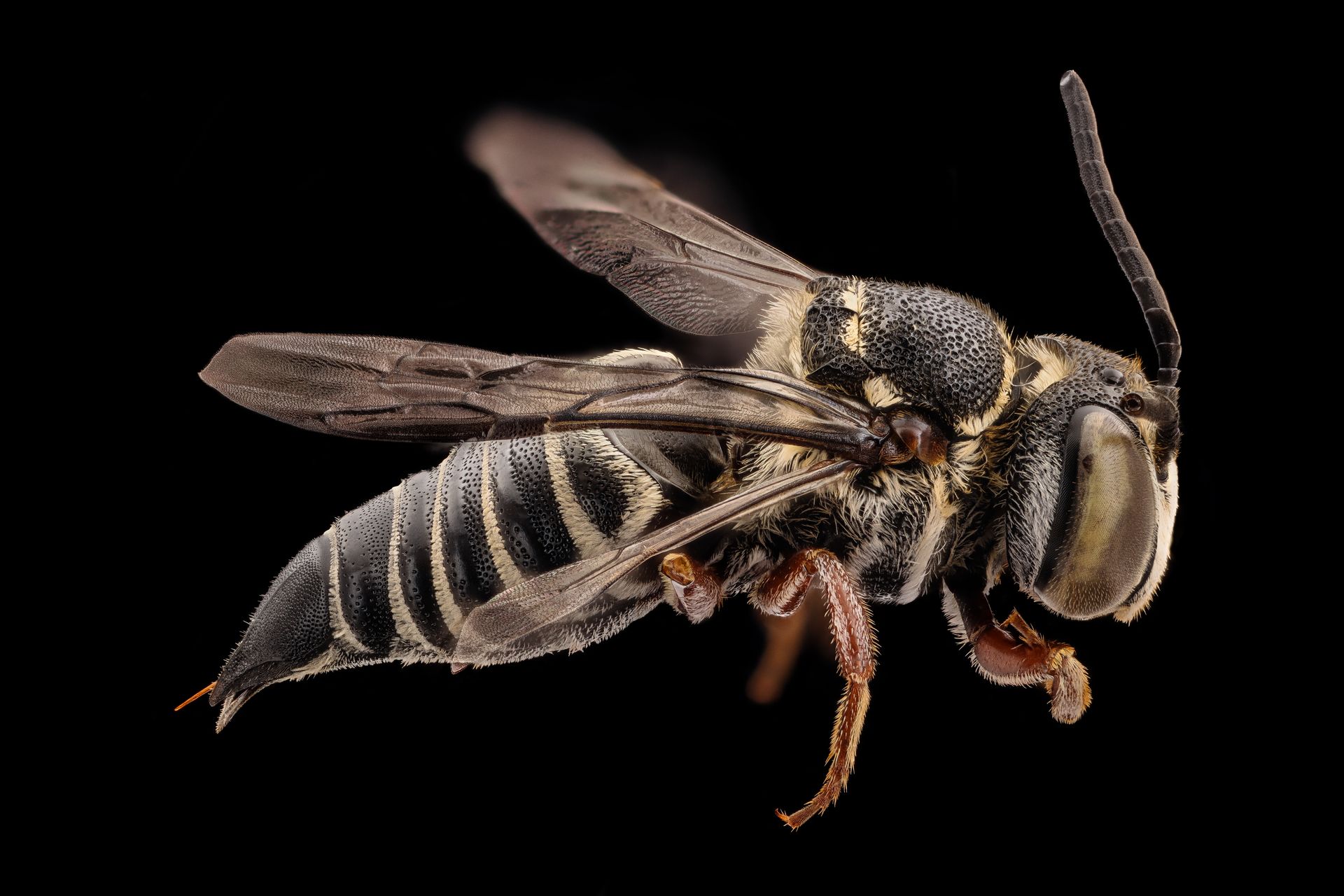
Coelioxys mexicanus is a of kleptoparasitic in the Megachilidae. As with other members of the Coelioxys, this species is a that lays its in the nests of other bees, primarily leafcutter bees (Megachile spp.). The species was described by Cresson in 1878 and occurs in North America and Middle America.
Pronunciation
How to pronounce Coelioxys mexicanus: /siːliˈɒksɪs mɛksɪˈkeɪnəs/
These audio files are automatically generated. While they are not always 100% accurate, they are a good starting point.
Identification
Coelioxys are distinguished from other megachilid bees by their pointed , which is adapted for inserting into the nest of bees. Females possess a long, pointed metasoma with a specialized egg-laying structure. The can be separated from the superficially similar Heriades by the presence of axillae and the structure of the scutellum. Species-level identification within Coelioxys requires examination of subtle morphological characters including punctation patterns on the and scutellum, the shape of the , and male genitalia.
Images
Distribution
North America and Middle America (Mexico and Central America). The has been recorded from the United States and Mexico based on distribution records in GBIF.
Diet
feed on nectar and pollen from flowers. As kleptoparasites, females do not construct their own nests or provision with pollen; instead, their larvae consume the pollen stores and often the or larva in the usurped nest cell.
Host Associations
- Megachile - kleptoparasiteCoelioxys are known to parasitize nests of leafcutter bees in the Megachile. The female C. mexicanus lays her in a , and the resulting larva kills the host egg or young larva and consumes the pollen provision.
Behavior
Females search for active nests of bees and, upon locating a suitable , use their pointed to insert an through the nest wall or cell cap. The larva develops rapidly, typically outpacing the host larva. Males emerge before females and may patrol nesting areas seeking mates.
Ecological Role
As a kleptoparasite, this exerts top-down pressure on of its bees. This parasitic relationship may influence host nesting , including nest site selection and the timing of provisioning activities.
Similar Taxa
- Coelioxys rufitarsisSimilar pointed and kleptoparasitic lifestyle, but differs in coloration of legs and , and in details of punctation and male genitalia.
- Coelioxys sodalisOverlapping distribution and use; separation requires examination of scutellar and punctation .
- Heriades spp.Superficially similar slender body form with somewhat pointed , but Heriades lacks axillae, has different scutellar structure, and are not kleptoparasites but rather nest in preexisting cavities.