
Stelis australis
Cresson, 1878
Species Guides
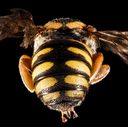
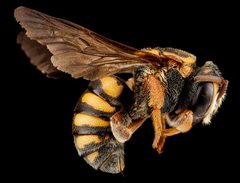
1Stelis australis is a of cleptoparasitic in the Megachilidae, described by Cresson in 1878. As a member of the Stelis, this species is a nest of other solitary bees, particularly those in the family Megachilidae. The specific epithet 'australis' suggests a southern distribution, though detailed biological information remains limited. Like other Stelis species, females likely enter nests to lay in provisioned , with larvae consuming the host's pollen stores and sometimes the host egg or larva.
Pronunciation
How to pronounce Stelis australis: //ˈstɛ.lɪs ɔˈstra.lɪs//
These audio files are automatically generated. While they are not always 100% accurate, they are a good starting point.
Images
Distribution
North America
Diet
Cleptoparasitic; larvae feed on pollen stores collected by bees, primarily megachilid
Behavior
Females are known to enter nests of bees to deposit in provisioned with pollen; this cleptoparasitic strategy eliminates the need for nest construction and pollen collection
Ecological Role
Acts as a (nest ) of solitary bees; are linked to abundance and nesting success
Sources and further reading
- BugGuide
- GBIF taxonomy match
- iNaturalist taxon
- Catalogue of Life
- They Know Their Insects | Bug Squad
- Destination Sonoran Desert: A time to sting for the Giant Hairy Desert Scorpion, 'Hadrurus arizonensis' — Bug of the Week
- Bare ground experiments to help save rare bees and wasps - Buglife Blog - Buglife
- Cimbicidae | Beetles In The Bush
- Nature's Night Lights - Buglife Blog - Buglife