
Ephialtes
Gravenhorst, 1829
Species Guides
1Ephialtes is a of ichneumonid wasps ( Ichneumonidae, Pimplinae, tribe Ephialtini) established by Gravenhorst in 1829. The genus includes that are ectoparasitoids of solitary Hymenoptera, with females possessing notably long ovipositors adapted for accessing nests. Ephialtes manifestator, the type species and best-documented member, has been subject to sequencing and ecological study. The genus is distributed across Europe and has been recorded in North America.
Pronunciation
How to pronounce Ephialtes: //ɛfɪˈæltiːz//
These audio files are automatically generated. While they are not always 100% accurate, they are a good starting point.
Identification
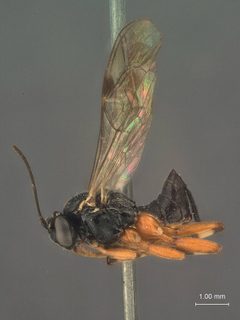
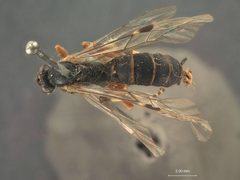
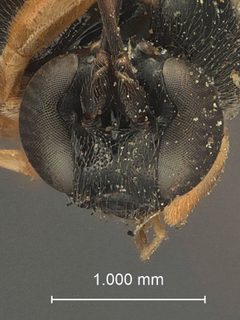
Distinguished from other Pimplinae by the combination of: extremely long female ovipositor relative to body size; black body with red legs in the common E. manifestator; and association with nests of solitary bees and . The Ephialtes is separated from the superficially similar Afrotropical genus Xanthephialtes by the latter's mandibular tooth conspicuously longer than the tooth, short stout flattened bristles on the foretibia, and mostly impunctate mesosoma. Within Ephialtes, identification requires examination of wing venation, ovipositor proportions, and body coloration patterns.
Images
Appearance
Medium to large ichneumonid wasps with elongated bodies. Body predominantly black with contrasting red legs in some . Females possess extremely long, slender ovipositors that can exceed body length; in E. manifestator, females reach approximately 20 mm in body length but up to 70 mm including the ovipositor. long and multi-segmented. Wings typically with some dark coloration, though extent varies by species.
Habitat
Found in proximity to nesting sites of , including hotels, standing deadwood, and sandy substrates where solitary bees and construct nests. Occurs across a range of terrestrial provided suitable hosts are present, from woodlands to more open environments.
Distribution
Europe (concentration of records from Western Europe, with scattered records from UK including Midlands and South Wales); recorded from Scandinavia (Denmark, Norway, Sweden); North America (Vermont, USA; sparse Canadian records).
Seasonality
Extended period from May through September in temperate regions, with peak activity spanning the summer months.
Host Associations
- solitary aculeate Hymenoptera - ectoparasitoidNot -specific; attacks various solitary bees and
- Megachile leachella - ectoparasitoidDocumented ; nests in sand
Life Cycle
Ectoparasitoid development on cocoons. Female uses long ovipositor to penetrate host nesting substrate and deposit on or near host cocoon. Larva feeds externally on host pupa. Developmental details beyond this general pattern are not well documented.
Behavior
Females actively search for nests and use their elongated ovipositors to access hosts concealed in wood, stems, or soil. Not host-specific, exploiting multiple of solitary bees and . period spans spring through late summer. An unusual gynandromorph (female , male metasoma) has been documented in E. manifestator reared from Megachile leachella cocoons.
Ecological Role
Ectoparasitoid that contributes to of solitary bees and . As a across multiple , may influence structure of nesting Hymenoptera.
Human Relevance
Subject of genomic research; E. manifestator sequenced as part of Darwin Tree of Life project. Occasionally encountered by entomologists and naturalists at hotels. No significant economic impact documented; neither beneficial nor detrimental to human interests at known levels.
Similar Taxa
- XanthephialtesFormerly confused or allied with Ephialtes; distinguished by mandibular tooth structure, foretibial bristle , and mesosomal punctation. Afrotropical distribution also separates it from primarily Palearctic Ephialtes.
- DolichomitusShares elongated ovipositor and general body form; both are wood-associated , but Dolichomitus attacks wood-boring beetles (Cerambycidae, Buprestidae) rather than Hymenoptera.
- PimplaCongeneric in Pimplinae; Pimpla are generally smaller with shorter ovipositors relative to body size and typically attack Lepidoptera pupae rather than Hymenoptera.
More Details
Genomic resources
The of E. manifestator has been sequenced and assembled: 577.70 Mb nuclear genome with 15 chromosomal pseudomolecules, and a 30.82 kb mitochondrial genome. Specimen from Wytham Woods, Oxfordshire, UK (collected 16 June 2021).
Taxonomic note
The name Ephialtes derives from Greek mythology and was also borne by an ancient Athenian democratic reformer (c. 460s BCE), creating potential for confusion in non-taxonomic contexts. The entomological genus was established by Gravenhorst in 1829.
Research gaps
range remains incompletely documented; most records derive from E. manifestator. Other in the are poorly known biologically. No direct observations of oviposition have been published.
Sources and further reading
- BugGuide
- Wikipedia
- GBIF taxonomy match
- iNaturalist taxon
- NCBI Taxonomy
- Catalogue of Life
- Review of the genus Xanthephialtes Cameron (Hymenoptera, Ichneumonidae), with re-definition of the genus and description of a new species from Uganda.
- The genome sequence of an ichneumonid wasp, Ephialtes manifestator (Linnaeus, 1758).