
Cratichneumon
Thomson, 1893
Species Guides
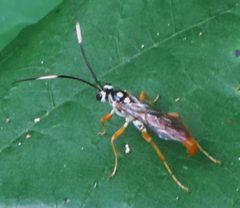
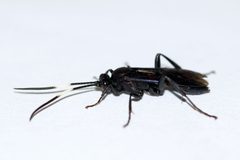
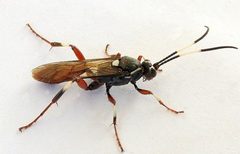
22Cratichneumon is a large and diverse of ichneumonid wasps in the Ichneumonidae, native to North America with the greatest diversity in the eastern United States and Canada. The genus comprises more than 100 described , with many additional undescribed species likely present. Members exhibit considerable size variation, ranging from small to relatively large individuals. The genus may be based on current evidence.
Pronunciation
How to pronounce Cratichneumon: /krəˈtɪk.njuː.mɒn/
These audio files are automatically generated. While they are not always 100% accurate, they are a good starting point.
Identification
Larger Cratichneumon may be confused with the Ichneumon; smaller species may be confused with Barichneumon, Melanichneumon, Homotherus, Aoplus, and Crypteffigies. Specific identification characters require examination of morphological details not provided in available sources.
Images
Distribution
Native to North America, with primary occurrence in the eastern United States and Canada. One of the most common and diverse ichneumonine in the . GBIF records indicate presence in Denmark, Norway, Sweden, Vermont (USA), and additional US locations, though these may represent data artifacts or introduced .
Similar Taxa
- IchneumonLarger Cratichneumon may be confused with this due to similar size.
- BarichneumonSmaller Cratichneumon may be confused with this .
- MelanichneumonSmaller Cratichneumon may be confused with this .
- HomotherusSmaller Cratichneumon may be confused with this .
- AoplusSmaller Cratichneumon may be confused with this .
- CrypteffigiesSmaller Cratichneumon may be confused with this .
More Details
Taxonomic uncertainty
The Cratichneumon may be based on current evidence, indicating that taxonomic revision may be needed.
Undescribed diversity
A 2024 study described 11 new from Arizona's Sky Islands alone, suggesting substantial undescribed species diversity exists within this .