
Melanichneumon
Thomson, 1893
Species Guides
5Melanichneumon is a of ichneumonid described by Thomson in 1893. The genus includes that function as agents of agricultural pests. M. rubicundus, the best-studied species, exhibits clear preferences and has been investigated for potential introduction to new regions for pest management.
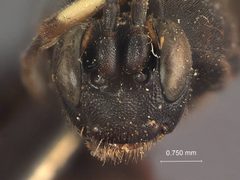
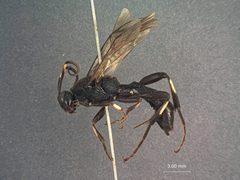
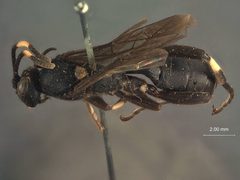
Pronunciation
How to pronounce Melanichneumon: /mɛˌlæ.nɪkˈnjuː.mɒn/
These audio files are automatically generated. While they are not always 100% accurate, they are a good starting point.
Images
Distribution
Records from Denmark, Norway, and Sweden; M. rubicundus occurs in the Eastern United States.
Host Associations
- Loxostege sticticalis - primary readily attacked in laboratory conditions
- Pyrausta nubilalis (European corn borer) - secondary/occasional attacked only with reluctance in laboratory; field attacks likely occur only when preferred are absent
Behavior
M. rubicundus shows strong preference hierarchy, attacking preferred hosts readily while rejecting less suitable hosts even when available.
Ecological Role
of lepidopteran larvae; potential agent for agricultural pests.
Human Relevance
Investigated as a agent for the European corn borer; breeding stocks established for potential liberations in Canada.
More Details
Taxonomic note
The was established by Thomson in 1893. GBIF records indicate presence in Scandinavia (Denmark, Norway, Sweden), while biological studies focus on North American of M. rubicundus.