
Lymeon
Förster, 1869
Species Guides
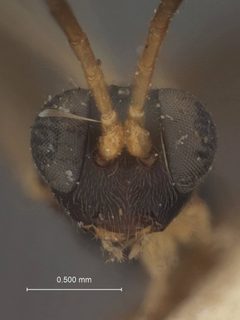
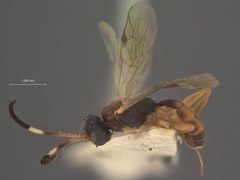
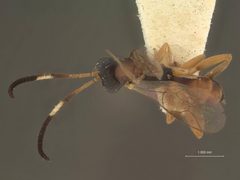
2Lymeon is a large of ichneumonid wasps in the Gelinae (tribe Cryptini), containing at least 80 described with a predominantly Neotropical distribution. The genus is characterized by females that parasitize small cocoons of various insect groups and spider -sacs. A taxonomic review recognized 33 North American species, with 28 species recorded from Mexico alone. One documented association involves a Lymeon species attacking egg-sacs of the orb-weaver spider Araneus vincibilis in Northeastern Brazil, where larvae consumed approximately 80% of spider eggs despite maternal guarding.
Pronunciation
How to pronounce Lymeon: //ˈliːmeɪɒn//
These audio files are automatically generated. While they are not always 100% accurate, they are a good starting point.
Identification
Identification to level requires examination of morphological characters detailed in taxonomic keys; 33 North American species are distinguished in published keys. The belongs to the tribe Cryptini, characterized by features of the fore wing areolet and propodeum structure. Species-level identification typically requires microscopic examination of specimens and comparison with type material.
Images
Habitat
Found in forested environments including dense vegetation of forests and montane semi-deciduous tropical forest. Specific microhabitat requirements are poorly documented beyond association with cocoons and -sacs.
Distribution
Predominantly Neotropical distribution. Recorded from North America (33 , including 28 from Mexico) and South America (Northeastern Brazil: Ceará State, Serra de Baturité region). The likely has broader distribution throughout the Neotropics based on patterns.
Diet
larvae feed on of organisms; documented consumption of spider eggs (Araneus vincibilis) with individual larvae consuming approximately 80% of eggs within an attacked egg-sac.
Host Associations
- Araneus vincibilis - -sac ; first recorded association for in Northeastern Brazil
Life Cycle
Females oviposit into -sacs or small cocoons. Larvae develop within the host structure, feeding on eggs. Multiple larvae (observed: up to 5 cocoons) can develop within a single egg-sac. occurs within individual cocoons constructed inside the host egg-sac. emerge by cutting an exit hole through the outer web layer of the egg-sac.
Behavior
females cut holes in the outer web layer of spider -sacs to exit after . The exhibits maternal -searching to locate spider egg-sacs and insect cocoons for oviposition. Maternal care by host spiders does not prevent successful .
Ecological Role
of spider and insect cocoons; agent of spider . Can cause significant mortality in spider populations (documented 80% egg consumption in attacked egg-sacs). Functions as a mortality factor for orb-weaver spiders in forest .
Similar Taxa
- RhiniumTwo formerly placed in Lymeon (Rhinium absolutum, Acerastes accolens) have been transferred to other based on morphological characters; these genera can be distinguished by features of the propodeum and wing venation.
- AcerastesFormerly included now excluded from Lymeon; distinguished by structural features of the mesosoma and wing characters.
More Details
Taxonomic History
Originally described by Förster in 1869. A 2004 taxonomic review established new synonymies: Lymeon imbecillis = L. leucosoma, and L. patruelis = L. rarus. Two were transferred to other : Rhinium absolutum and Acerastes accolens. The genus was formerly placed in Cryptinae but current classification places it in Gelinae (tribe Cryptini).
Research Needs
Most remain biologically undescribed. associations are documented for only a small fraction of species. Basic data including seasonality, specificity, and complete host ranges are unknown for the majority of species.
Sources and further reading
- BugGuide
- Wikipedia
- GBIF taxonomy match
- iNaturalist taxon
- NCBI Taxonomy
- Catalogue of Life
- lymeon_tobiasi_kasparyan_holotype_female_ucrc_ent_88821_prododeum.jpg | Entomology Research Museum
- Primary Type List | Entomology Research Museum
- Review of North American species of the genus Lymeon Foerster, 1869 (Hymenoptera: Ichneumonidae: Cryptini)
- First record of the parasitoid wasp Lymeon sp. (Ichneumonidae: Cryptinae) associated with spider eggs-sac of Araneus vincibilis (Araneae: Araneidae) in Northeastern Brazil