
Trathala
Cameron, 1899
Species Guides
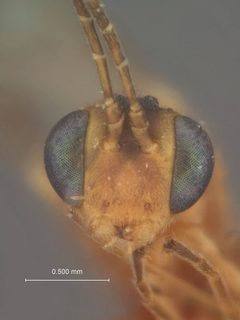
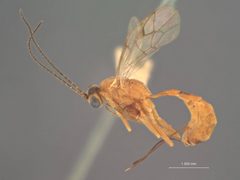
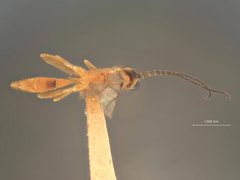
2Trathala is a of ichneumonid wasps first described by Cameron in 1899. within this genus are larval-pupal of lepidopteran . Trathala flavoorbitalis has been studied as a agent for agricultural pests including the brinjal shoot and fruit borer (Leucinodes orbonalis) and rice leaffolder. The genus exhibits host-stage selectivity, with successful development typically occurring in third to fifth instar host larvae.
Pronunciation
How to pronounce Trathala: /trɑːˈθælə/
These audio files are automatically generated. While they are not always 100% accurate, they are a good starting point.
Images
Host Associations
- Leucinodes orbonalis - brinjal shoot and fruit borer; primary for T. flavoorbitalis
- Rice leaffolder - secondary ; rates 1.52–2.14 fold lower than on brinjal shoot and fruit borer
Life Cycle
Total developmental time approximately 20–24 days when parasitizing second to fifth instar larvae. Successful parasitization and occurs in 53% of third instar, 57% of fourth instar, and 41% of fifth instar hosts. First instar hosts and approximately 50% of second instar hosts are mutilated and die following oviposition.
Behavior
Stinging response elicited by larvae of any instar (first to fifth). When given a choice, avoid first instar and most second instar larvae, while third to fifth instars are accepted equally. Unlike most larval-pupal parasitoids, parasitized hosts at contain different developmental stages of the parasitoid.
Ecological Role
agent of agricultural pest larvae. Trathala flavoorbitalis has been evaluated for control of brinjal shoot and fruit borer and rice leaffolder in greenhouse and field settings.
Human Relevance
Studied for potential use in of brinjal (eggplant) and rice crops. varies by and host instar.
Sources and further reading
- BugGuide
- GBIF taxonomy match
- iNaturalist taxon
- NCBI Taxonomy
- Catalogue of Life
- trathala_sulcifera_dasch_holotype_female_ucrc_ent_283774_propodeum.jpg | Entomology Research Museum
- Primary Type List | Entomology Research Museum
- Trathala Flavoorbitalis: Parasitization and Development in Relation to Host-Stage Attacked
- HOST PREFERENCE OF TRATHALA FLAVOORBITALIS ON BRINJAL SHOOT AND FRUIT BORER AND RICE LEAF FOLDER