
Syntretus
Förster, 1862
Syntretus is a of in the Braconidae, Euphorinae. in this genus are known to parasitize hymenopterans, particularly bees. Documented include bumblebees (Bombus), (Trigona carbonaria), and one species, S. perlmani, parasitizes adult Drosophila fruit flies. Research has demonstrated that Syntretus species carry commensal , which are transmitted by -laying females to circumvent host immune responses during larval development.
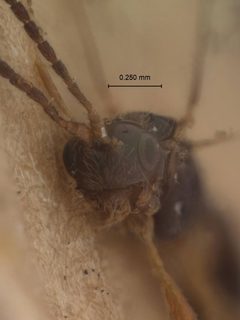
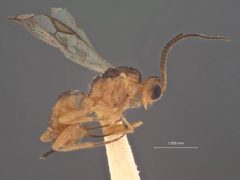
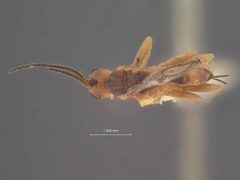
Pronunciation
How to pronounce Syntretus: //sɪnˈtrɛtəs//
These audio files are automatically generated. While they are not always 100% accurate, they are a good starting point.
Images
Distribution
Europe (including Denmark, Norway, Sweden), Australia
Host Associations
- Bombus subterraneus - queens parasitized in Sweden
- Trigona carbonaria - in Australia
- adult bumblebees - general group for S. splendidus
- Drosophila - exceptional for S. perlmani
Life Cycle
Larvae emerge from after development. stages develop within adult hymenopteran hosts.
Behavior
-laying females transmit to , which function to suppress host immune responses and enable larval development.
Ecological Role
of hymenopterans, with potential regulatory effects on . Associated represent a symbiotic relationship that facilitates .
Human Relevance
Has been studied in the context of conservation , particularly regarding reintroduction programs for Bombus subterraneus in the United Kingdom. Museum specimens have proven valuable for genomic studies of - relationships.
More Details
Polydnavirus association
Syntretus is the first in which commensal have been identified. These viral sequences are transmitted by females during oviposition and are used to circumvent immune defenses. Phylogenetic analysis suggests the viral may have evolutionary histories distinct from their hosts, lacking evidence for co-speciation.
Sources and further reading
- BugGuide
- Wikipedia
- GBIF taxonomy match
- iNaturalist taxon
- NCBI Taxonomy
- Catalogue of Life
- The biology and immature stages of Syntretus splendidus (Marshall) (Hymenoptera: Braconidae, Euphorinae), a parasite of adult bumblebees
- DNA from museum samples of a parasitoid wasp genus (Braconidae: Syntretus ) offers novel insights into host‐parasitoid interactions
- A new species ofSyntretusFoerster (Hymenoptera: Braconidae: Euphorinae), a parasitoid of the stingless beeTrigona carbonariaSmith (Hymenoptera: Apidae: Meliponinae)