
Elasmosoma schwarzi
Ashmead, 1895
Elasmosoma schwarzi is a of in the Braconidae, Euphorinae, described by Ashmead in 1895. The Elasmosoma comprises parasitoids, with females depositing inside ant . E. schwarzi is native to the southwestern United States, where it has been documented in Texas. Like other members of the genus, it exhibits specialized adaptations for attacking ants, which are highly defensive .
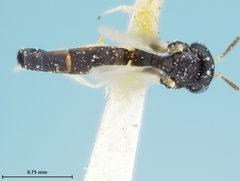
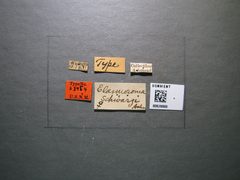
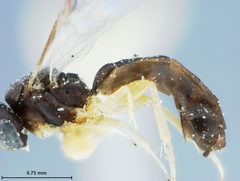
Pronunciation
How to pronounce Elasmosoma schwarzi: /ɛˌlæzməˈsoʊmə ˈʃvɑrtsi/
These audio files are automatically generated. While they are not always 100% accurate, they are a good starting point.
Images
Distribution
Southwestern United States, specifically documented from Texas.
Host Associations
Behavior
Females attack in , ovipositing that develop internally within the . The 's small size (under 2 mm) and specialized allow it to overcome ant defenses.
Ecological Role
of ants, potentially influencing and colony structure through mortality of ants.
Similar Taxa
- Elasmosoma luxemburgenseCongeneric with similar and , distinguished by geographic distribution and subtle morphological differences
- Kollasmosoma sentumAnother euphorine with convergent attack , but placed in a different based on morphological and molecular characters
- Neoneurus vesculusMember of the same tribe (Neoneurini) with similar lifestyle, but differs in ant preferences and morphological details
More Details
Taxonomic context
The Elasmosoma belongs to the tribe Neoneurini within the Euphorinae. These represent a remarkable evolutionary specialization, as ants are among the most heavily defended insects and few successfully exploit them.
Sources and further reading
- BugGuide
- GBIF taxonomy match
- iNaturalist taxon
- Catalogue of Life
- Another look at North America’s most beautiful longhorned beetle | Beetles In The Bush
- Bug Eric: Webspinners
- How to collect larvae of Amblycheila cylindriformis | Beetles In The Bush
- Pensoft Editorial Team | Blog - Part 159
- Beetle Collecting 101: Fermenting bait traps for collecting longhorned beetles | Beetles In The Bush