
Atanycolus longicauda
Shenefelt, 1943
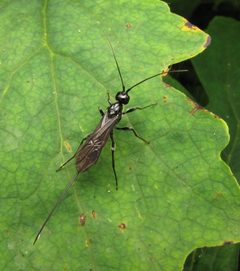
Atanycolus longicauda is a of in the Braconidae, described by Shenefelt in 1943. As a member of the Atanycolus, it belongs to a group of braconid wasps known for their role as parasitoids of wood-boring beetles. The specific epithet 'longicauda' refers to its elongated or tail-like structure. Like other Atanycolus species, it likely targets larvae of longhorn beetles (Cerambycidae) and metallic wood-boring beetles (Buprestidae), though species-specific records for A. longicauda remain limited in the available literature.
Pronunciation
How to pronounce Atanycolus longicauda: //əˌtænɪˈkoʊləs ˌlɒŋɡɪˈkaʊdə//
These audio files are automatically generated. While they are not always 100% accurate, they are a good starting point.
Images
Ecological Role
As a in the Braconidae, Atanycolus longicauda contributes to the natural of wood-boring . Parasitoid wasps in this are known to attack larvae of cerambycid and buprestid beetles that develop in dead or dying wood, helping regulate these populations in forest and woodland .
Sources and further reading
- BugGuide
- GBIF taxonomy match
- iNaturalist taxon
- Catalogue of Life
- Ten Facts You May Not Know About Tadpole Shrimp | Bug Squad
- Begone Tadpole Shrimps! They're 'Time Travelers' in Rice Fields | Bug Squad
- Outstanding Group of UC Davis Graduate Students at ESA Meeting | Bug Squad
- Visitors Marvel at Tadpole Shrimp at Bohart Museum Open House | Bug Squad
- Nuptial Gifts and Other Romantic Gestures of the Bug World
- Researchers Find Hundreds of Arthropod Species in U.S. Homes