
Dufourea monardae
(Viereck, 1924)
Beebalm Shortface Bee, monarda dufourea
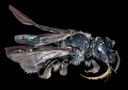
A small sweat bee in the Halictidae, commonly known as the Beebalm Shortface . Females measure approximately 7 mm, males 6–7 mm. The exhibits in shape, with females having a strongly protuberant and males possessing a longer head. It is an oligolectic , collecting pollen exclusively from bee balm plants (Monarda spp.). Active primarily during July and August across its North American range.


Pronunciation
How to pronounce Dufourea monardae: //duːˈfɔːriə moʊˈnɑːrdiː//
These audio files are automatically generated. While they are not always 100% accurate, they are a good starting point.
Identification
females are about 7 mm long, black with sparse pale hairs and a strongly protuberant . Males are 6–7 mm long, similarly colored, with a longer than females, lightly infuscated wings, and unmodified slender hind legs. Both sexes have smooth, shiny abdominal segments and short pale . The protuberant facial structure of females is distinctive within the .
Images
Habitat
Associated with supporting its plant, balm (Monarda spp.). The has been observed in prairie remnants, limestone glades, and dry-mesic deciduous forest edges where bee balm occurs.
Distribution
North America. Documented from the United States, including Vermont and other states. GBIF records indicate presence across North America with specific records from Vermont.
Seasonality
Typically active during July and August.
Diet
Oligolectic, collecting pollen exclusively from balm plants (Monarda spp.).
Host Associations
- Monarda - pollen sourceoligolectic association; sole pollen source
- Monarda fistulosa - pollen sourcespecifically noted as balm
Behavior
have been observed resting on flowers, sometimes in groups with minimal activity. One observation notes multiple individuals sitting together on a Heliomeris longifolia flower without active foraging .
Ecological Role
. As an oligolectic , it contributes to the pollination of bee balm plants (Monarda spp.) and potentially facilitates reproductive success of this plant .
Similar Taxa
- DufoureaOther in the Dufourea share the general body plan and halictid characteristics, but D. monardae is distinguished by its oligolectic association with Monarda and the strongly protuberant female .
- ConohalictoidesFormerly classified in this ; now synonymized under Dufourea. Historical literature may reference this name.