
Halictus virgatellus
Cockerell, 1901
Comma Sweat Bee
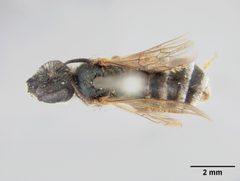
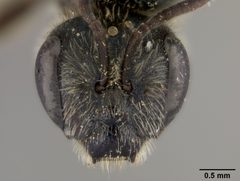
Halictus virgatellus is a of sweat bee in the Halictidae, first described by Cockerell in 1901. It is known from North America and is commonly referred to as the Comma Sweat Bee. Like other members of the Halictus, it is a ground-nesting . Specific details about its and remain poorly documented.
Pronunciation
How to pronounce Halictus virgatellus: /həˈlɪktəs ˌvɜːrɡəˈtɛləs/
These audio files are automatically generated. While they are not always 100% accurate, they are a good starting point.
Identification
Members of the Halictus are medium-sized sweat bees, typically brown or blackish with pale bands across the . The specific epithet "virgatellus" (diminutive of "virgatus," meaning striped or streaked) suggests subtle longitudinal markings may distinguish this from . Precise identification requires examination of morphological characters not reliably distinguishable from general descriptions.
Images
Distribution
North America. Distribution records indicate presence on the continent, though specific range boundaries are not well documented.
Ecological Role
As a member of Halictidae, this likely functions as a of flowering plants and contributes to local pollination services. Ground-nesting habits suggest it may play a role in soil aeration and nutrient cycling through nest excavation activities.
Similar Taxa
- Halictus ligatusAnother North American Halictus with similar size, coloration, and banded abdominal pattern; may occur sympatrically and require detailed morphological examination to distinguish
- Halictus tripartitusShares the medium-sized, banded typical of the ; specific characters separating these are subtle and may require identification
- Lasioglossum speciesOften mistaken for Halictus due to similar small size and ground-nesting habits; Lasioglossum are generally smaller, often with metallic coloration, and belong to a different tribe (Halictini vs. Halictina)
More Details
Taxonomic Note
The specific epithet "virgatellus" is a diminutive form, suggesting the exhibits finer or less pronounced striping than related species with "virgatus" in their names. The species was described by Theodore Dru Alison Cockerell, a prolific entomologist who described numerous species in the early 20th century.
Data Deficiency
This is represented by only 19 observations on iNaturalist as of the knowledge cutoff, indicating it is either genuinely rare, under-reported, or difficult to identify. The paucity of records limits confident statements about its , preferences, and conservation status.
Sources and further reading
- BugGuide
- Wikipedia
- GBIF taxonomy match
- iNaturalist taxon
- Catalogue of Life
- Are Honeybees the Most Effective Pollinators? | Bug Squad
- 'Bee' One in a Million | Bug Squad
- Going Native: Do You Know the Native Bees of California? | Bug Squad
- Sweet times for sweat bees: Sweat bees, Halictus ligatus and Agapostemon virescens — Bug of the Week
- Ground nesting bees, beware the bee fly: Bombyliidae — Bug of the Week
- Bug Eric: Don't Sweat 'em