
Pseudomyrmex caeciliae
(Forel, 1913)
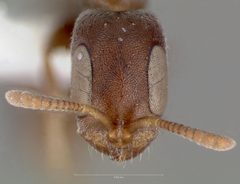
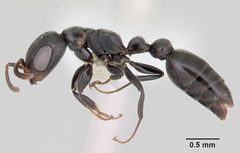
Pseudomyrmex caeciliae is a of twig in the Pseudomyrmex, described by Forel in 1913. Like other members of this large Neotropical genus, it exhibits an elongate, -like body form and notably large relative to size. The genus Pseudomyrmex contains over 200 described species, many of which are associated with woody vegetation and some with specialized plant mutualisms. Specific ecological details for P. caeciliae remain poorly documented in available literature.
Pronunciation
How to pronounce Pseudomyrmex caeciliae: //ˌsjuːdoʊˈmɪrmɛks siˈsɪli.i//
These audio files are automatically generated. While they are not always 100% accurate, they are a good starting point.
Identification
Definitive identification of P. caeciliae requires examination of morphological characters not visible in field observations, including specific features of the petiole node shape, pilosity patterns, and genitalic structures. The belongs to a with hundreds of species, many forming cryptic complexes. It can be distinguished from superficially similar Pseudomyrmex species only through detailed taxonomic analysis using specialized keys and ideally voucher specimens.
Images
Appearance
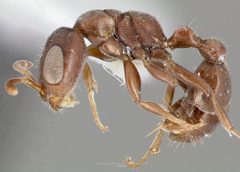
Pseudomyrmex caeciliae has an elongate, slender body with a -like profile characteristic of the . The are exceptionally large relative to the , providing acute vision. The body is smooth and lacks the heavy sculpturing or prominent spines seen in many other genera. Coloration and exact size measurements for this are not well documented in available sources.
Habitat
As a member of Pseudomyrmex, likely associated with woody vegetation including trees and shrubs. The genus is frequently found on branches and twigs rather than ground-foraging. Specific preferences for P. caeciliae are not documented.
Distribution
Distribution details for P. caeciliae are sparse. The has been recorded in Argentina based on limited observations. The Pseudomyrmex is primarily Neotropical in distribution.
Similar Taxa
- Pseudomyrmex flavidulusSimilar small size and yellowish coloration; distinguished by subtle morphological differences in petiole structure and pilosity requiring expert examination
- Pseudomyrmex gracilisLarger and hairier with different petiole shape; P. gracilis exceeds 10 mm while most are smaller
- Pseudomyrmex ferrugineaWell-known acacia-associated with aggressive defensive ; ecological association with bullhorn acacia distinguishes it from most other Pseudomyrmex
More Details
Taxonomic Uncertainty
The Pseudomyrmex contains numerous cryptic , and P. caeciliae may be part of an unresolved group. Expert myrmecologists note that many 'species' in this genus likely subsume multiple cryptic pending detailed revisionary work.
Observation Challenges
Members of this are notoriously difficult to photograph due to rapid, continuous movement along narrow branches and tendency to circle to the far side of substrates when approached.
Sources and further reading
- BugGuide
- GBIF taxonomy match
- iNaturalist taxon
- NCBI Taxonomy
- Catalogue of Life
- The bodyguard: Pseudomyrmex ants protecting bullhorn acacias — Bug of the Week
- Rainforest Ants 3 – The Bodyguards, part 1: Pseudomyrmex ants protecting bullhorn acacias — Bug of the Week
- Bichos Argentinos #2 – Pseudomyrmex sp. | Beetles In The Bush
- Pseudomyrmex in Corrientes, Argentina | Beetles In The Bush